Strategic Blueprints on How to Reduce Skydiving License Costs Effectively
Earning a skydiving license represents a complex financial commitment that integrates aviation infrastructure, human instruction, and strictly regulated regulatory frameworks. Aspiring jumpers discover that the path to a United States Parachute Association (USPA) “A” license is often shaped by variables that extend far beyond initial jump fees. Equipment maintenance, aircraft fuel costs, specialized instructor time, and weather delays all combine to create a unpredictable spending environment. Without careful structural planning, students frequently face unexpected financial hurdles that disrupt their training momentum.
The world of skydiving instruction has shifted from military-style training methods to highly specialized, civilian-focused licensing programs. Modern drop zones operate as precision aviation businesses where aircraft turnaround times and student throughput dictate daily pricing structures. This operational landscape requires students to view licensing through a clear analytical lens, balancing cost constraints against safety benchmarks.
True mastery of skydiving logistics requires a deep understanding of hidden operational costs, drop zone choices, and currency requirements. By exploring vertical wind tunnel integration, block-purchasing strategies, and equipment rental logistics, this guide provides a clear blueprint for student jumpers. This comprehensive text equips athletes with the practical insights needed to manage their skydiving journey with high fiscal efficiency.
Understanding “how to reduce skydiving license costs”
Multi-Perspective Financial Management
Analyzing how to reduce skydiving license costs requires a multi-layered approach that connects drop zone business models with student learning rates. From an operational perspective, student pricing is tied directly to the type of jump aircraft used and the local cost of aviation fuel. Drop zone owners manage narrow profit margins by keeping planes full and instructors working consistently throughout the day. Conversely, the student’s focus centers on minimizing repeat jumps and avoiding long breaks that erode hard-earned muscle memory.
Integrating these perspectives helps students identify hidden windows of training efficiency on the drop zone. A student who arrives prepared can optimize their instructor’s time, turning a standard training day into a highly efficient learning block.
Common Misunderstandings and Oversimplifications
A common financial mistake in skydiving training is selecting a drop zone based solely on the lowest advertised price per jump. Low upfront costs often hide hidden fees, such as unbundled gear rentals, separate logbook costs, or higher repeating charges for failed levels. Cheaper facilities may also run smaller, slower aircraft, which limits how many jumps a student can realistically complete in a weekend.
Another frequent error is assuming that taking weeks off between jumps saves money by spreading out expenses over time. In reality, long breaks cause a rapid drop in student currency, requiring expensive repeat jumps under close instructor supervision. Spreading out training too much often inflates the total cost of a license well beyond the expense of a fast, continuous program.
Operational Cost Drivers in Modern Drop Zones
To understand how to reduce skydiving license costs, students must analyze the underlying expenses that shape drop zone operations. A major cost factor is the type of aircraft used, with large turbine planes costing significantly more per hour to run than small piston aircraft. Turbine aircraft offset their high fuel burn by climbing to 14,000 feet in fifteen minutes, maximizing student training opportunities per flight.
Drop zones must also invest heavily in liability insurance, equipment maintenance, and reserve parachute inspections required by aviation regulators. These fixed operating costs are factored into every student jump package, limiting a school’s ability to offer deep discounts. Recognizing these operational constraints helps students focus on efficiency strategies they can control, such as preparation and scheduling.
Deep Contextual Background: The Evolution of Skydiving Curriculums
The Static Line Era
Early sport skydiving training relied on military-derived static line methods developed during the mid-twentieth century. In these programs, a cable attached to the aircraft automatically deployed the student’s parachute immediately after exit. This approach minimized early freefall risks but required many jumps for students to learn basic body stabilization skills.
As civilian interest grew, instructors realized that static line training prolonged the learning curve for high-altitude skydiving. Students spent numerous lower-altitude jumps learning skills that could be taught faster through direct freefall coaching. This realization triggered a push for alternative training methods that could reduce the time and cost required to earn a license.
The Rise of Accelerated Freefall (AFF)
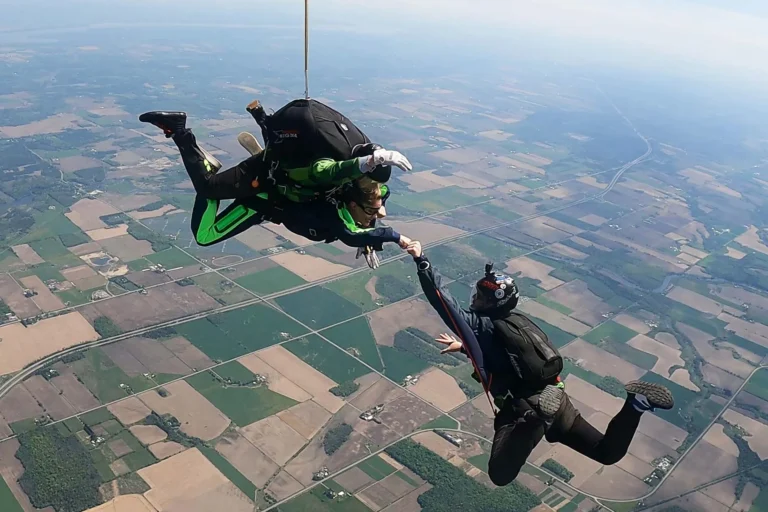
The introduction of the Accelerated Freefall (AFF) curriculum in the late 1970s changed how students learned the sport. AFF skipped the static line phase entirely, putting students into 50-second freefalls from 13,000 feet on their very first jump. Two instructors held the student’s harness during flight, providing real-time hand signals to correct body position and instability.
This direct method allowed students to build spatial awareness and freefall skills much faster than older methods. While an AFF jump cost more than a static line jump, the faster progression reduced the total number of flights needed for a license. This efficiency made AFF the gold standard for drop zones worldwide, fundamentally changing student training costs.
The Digital Era and Wind Tunnel Integration
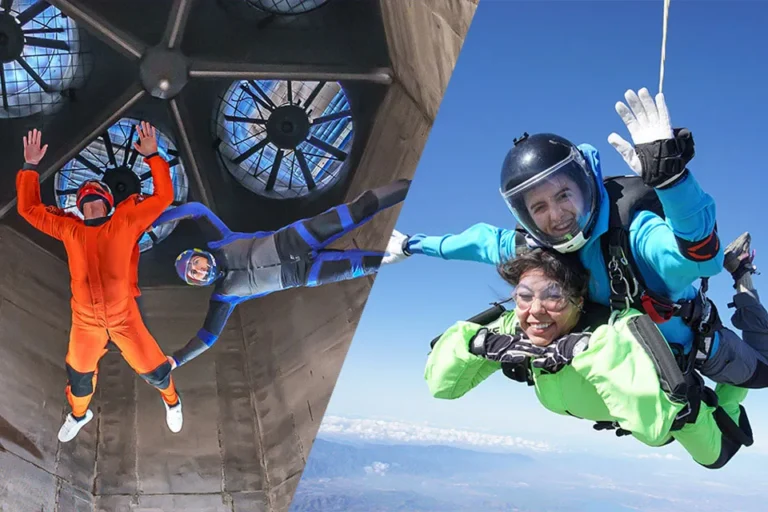
The widespread availability of vertical wind tunnels in the early 2000s added another layer of efficiency to skydiving education. Tunnels allow students to practice freefall positions in a controlled environment without the logistics of aircraft and parachutes. Instructors can physically adjust a student’s body positioning continuously, compressing hours of skydiving experience into minutes of flight time.
Modern skydiving programs frequently combine wind tunnel coaching with traditional AFF jumps into streamlined courses. This approach helps students master body flight controls on the ground, dramatically lowering the risk of failing expensive air jumps. Today, optimizing the balance between tunnel time and plane jumps is the most effective strategy for managing training costs.
Conceptual Frameworks and Mental Models of Student Progression
The Currency Compression Model
The Currency Compression framework states that training efficiency increases when jumps are scheduled closely together. Learning skydiving requires building complex muscle memory and managing intense survival reflexes under high stress. When jumps are grouped into a tight schedule, the brain retains spatial awareness and motor skills much more effectively.
This model shows that compression helps students bypass the costly cycle of retraining and currency jumps required by regulatory bodies. It demonstrates that saving for a complete course and executing it quickly is more cost-effective than paying jump-by-jump over a year.
The Proprioceptive Simulation Metric
The Proprioceptive Simulation model highlights the cost-saving power of practicing body positions before heading up in the aircraft. Freefall environments provide intense sensory inputs that can easily overload a new student’s nervous system. By using wind tunnels and ground training creepers, students can build muscle memory in a low-stress setting.
This preparation lowers the risk of instability or panic during actual jumps, ensuring the student passes each license level on their first attempt. Investing in targeted ground training reduces air mistakes, helping keep the overall licensing budget under control.
The Total Cost of Ownership (TCO) Asset Model
The Total Cost of Ownership model encourages students to analyze the long-term financial shifts that occur after earning a license. During student status, gear rental fees are typically included in the package price or billed as a small add-on. Once licensed, however, renting a parachute system, helmet, altimeter, and jumpsuit quickly becomes an expensive logistical drain.
This model helps students map out the exact point where buying reliable used gear becomes cheaper than renting drop zone equipment. It shows that true cost management requires planning for these equipment expenses early in the training process.
Key Categories and Variations of License Pathways
Accelerated Freefall (AFF) Direct Track
The Accelerated Freefall program remains the fastest path to a skydiving license for most students. It involves an intensive eight-level airborne curriculum where instructors evaluate specific survival skills, turns, and stability controls on every flight. After passing these initial levels, the student transitions to solo status while completing coach jumps to reach the 25-jump requirement.
The primary advantage of AFF is its widespread availability and the deep immersion it provides in high-altitude freefall mechanics. However, its upfront cost per jump is high due to the dedicated instructor staffing required for safety. If a student struggles with a specific skill and repeats multiple levels, the total cost of the course can quickly climb.
Static Line and IAD Progression
Static Line and Instructor-Assisted Deployment (IAD) programs offer a stepped approach by starting students at lower deployment altitudes. On these jumps, the parachute is opened automatically by a mechanical line attached to the plane as the student exits at 4,000 feet. As the student demonstrates clean exit stability, they are gradually cleared for higher altitudes and longer delays before pulling the ripcord.
This track features a much lower cost per jump, making it accessible for students working with tight weekly budgets. The trade-off is a significantly longer progression timeline that requires more total jumps to build freefall comfort. While individual jump tickets are cheaper, the slow pace means the overall cost of reaching a license often mirrors AFF.
Integrated Hybrid Courses (Tunnel + AFF)
Hybrid licensing courses combine the strengths of vertical wind tunnel training with a compressed AFF jump schedule. Students typically spend thirty to sixty minutes in a wind tunnel with a coach before making their first actual jump from an aircraft. This pre-flight training ensures students can maintain a stable belly-to-earth position and handle emergency signals before ever leaving the ground.
This method minimizes the risk of failing early AFF levels, protecting students from expensive repeat jumps in the air. The upfront cost for tunnel time is noticeable, but it yields substantial savings by smoothing out the remaining airborne training. Hybrid courses are highly favored by data-driven students looking to optimize their licensing costs.
Strategic Decision Logic
When choosing a training pathway, students must match their learning style and local weather patterns against available drop zone programs. They should look past marketing brochures and analyze the actual aircraft availability and instructor availability at their chosen school. The core decision centers on whether to invest in a fast, front-loaded course or follow a slower, budget-spaced track.
If a student has the upfront funds, a hybrid course executed over two weeks provides the highest cost efficiency. However, if they need to pay as they go, a static line program can work well if they stick to a strict weekly schedule. The key is avoiding erratic gaps that trigger expensive retraining fees and stall progress.
Detailed Real-World Scenarios and Training Interventions
Scenario A: The Multi-Month Extended Weekend Progression
A student decides to save money by paying for their AFF course one jump at a time, traveling to the drop zone every two to three weeks. Because they face frequent weather delays and long gaps between flights, they often forget subtle muscle adjustments needed for stable turns. They find themselves repeating levels three and five multiple times under close instructor supervision.
-
Core Financial Weaknesses: Long training gaps erode muscle memory, creating an expensive loop of repeated jumps and extra rental fees.
-
Immediate Field Corrections: The student should pause their jumps and spend fifteen minutes in a vertical wind tunnel to lock in basic stability controls. They must change their schedule to group their remaining jumps into consecutive days over a single weekend.
-
Preventative Adjustment: Future training blocks should be fully funded upfront, allowing the student to execute jumps in a tight, compressed window.
Scenario B: High Efficiency on a Vacation Vacation Drop Zone
An aspiring jumper takes two weeks off work to attend a high-volume, turbine-powered training center in a sunny region. They purchase a complete “A” license package upfront, which includes wind tunnel time, ground school, and all twenty-five required jumps. Thanks to clear weather and a large fleet of planes, they complete the entire licensing curriculum in nine days without repeating a level.
-
Core Financial Strengths: The upfront package discount combines with rapid progression, saving money by avoiding currency updates and travel overhead.
-
Immediate Field Corrections: The student should use weather delays to complete their written exams and packing requirements, keeping their schedule clear for jumping.
-
Preventative Adjustment: This model works best when planned during dry seasons to minimize the risk of getting stuck at the drop zone during storms.
Scenario C: Transitioning from Static Line to Freefall
A college student with limited cash joins a university club that uses a traditional static line progression at a small local airport. They pass their early deployment tests easily but struggle with instability during their first unassisted ten-second freefalls. The small plane’s slow ascent times limit them to just two jump attempts per weekend, stalling their progress.
-
Core Financial Weaknesses: Slow plane turns limit jump opportunities, extending the timeline and increasing the risk of losing currency over winter breaks.
-
Immediate Field Corrections: The student should request intensive ground creeper coaching to master their exit body position on the ground. If they continue to struggle, transferring their records to a larger turbine drop zone can help them finish faster.
-
Preventative Adjustment: When training at smaller airports, students must use ground practice tools aggressively to make every flight count.
Planning, Cost, and Resource Dynamics in Aviation Logistics
Direct Budgetary Requirements
Navigating skydiving expenses effectively requires an understanding of how aviation operations shape school pricing. Parachute centers manage massive overhead, including aviation fuel, mandatory gear inspections, and regular aircraft maintenance schedules. These fixed costs mean that raw ticket prices rarely drop below a set baseline without sacrificing safety or equipment quality.
Students can lower these baseline costs by purchasing prepaid packages that bundle ground school, gear rentals, and jump tickets together. These packages provide drop zones with reliable cash flow, allowing them to pass savings along to the student. However, jumpers must review the fine print to ensure the bundle covers all twenty-five jumps required for the USPA license.
Indirect and Opportunity Costs
The real cost of earning a skydiving license extends far beyond the prices listed on a drop zone’s website. Long commutes to distant airports add significant expenses in fuel, vehicle wear, and sometimes local lodging or camping fees. Additionally, spending whole weekends waiting out weather delays introduces an opportunity cost that impacts work schedules and personal time.
Students can minimize these indirect expenses by choosing a training center that allows camping or provides cheap bunkhouses on-site. Immersing oneself at the drop zone for a long weekend cuts down on travel costs and ensures the student is ready to jump the moment the weather clears. This approach turns idle waiting time into valuable opportunities for ground schooling and watching parachute packing styles.
Tools, Strategies, and Support Systems
Non-Airborne Training Assets
-
Vertical Wind Tunnels: These facilities use powerful fans to generate clean, vertical airflow that perfectly matches freefall speeds. Spending short sessions in the tunnel builds air stability, turn controls, and altitude awareness without the overhead costs of flying a plane. It remains the most effective ground tool for avoiding expensive repeated levels in the air.
-
Ground Training Creepers: These low, wheeled platforms allow students to lie flat and practice freefall turns and exit positions on the hangar floor. They provide an easy, cost-free way to build muscle memory and practice hand signals with classmates before loading the plane.
-
Parachute Packing Mats: Dedicated mats protect canopy fabrics from dirt and asphalt wear during packing practice. Learning to pack student gear early saves money on packing fees and fulfills a core requirement for the USPA “A” license.
Logistical Sourcing Strategies
Purchasing reliable, high-quality used gear is a critical transition step for any budget-conscious, newly licensed jumper. The used skydiving market offers massive savings over buying custom containers, main parachutes, and reserve systems from the manufacturer. However, students must always hire an FAA-certified master rigger to inspect any used gear before finalizing a purchase.
Jumpers can also save money by joining drop zone gear co-ops or negotiating long-term rental agreements with local gear stores. These arrangements bypass high daily rental fees while a jumper saves up for their own custom system. Finding these community-driven equipment pipelines helps keep skydiving affordable after graduation.
Risk Landscape and Failure Modes of Accelerated Training
Compounding Weather and Currency Stressors
Pushing through a skydiving program too fast can create a unique set of financial and safety risks during changing seasons. High winds, low clouds, and sudden storms can ground students for days, driving up travel and lodging costs while they wait. If a student tries to force a jump in marginal weather conditions to hit a timeline, they risk dangerous off-field landings or landing injuries.
Extended ground delays also cause a student’s currency status to expire under USPA safety rules, requiring mandatory retraining flights. These refresher jumps add unexpected costs and break the training momentum needed to master complex airborne skills. Managing these natural patterns requires a realistic timeline that accounts for seasonal weather trends from the start.
The Financial Pressure Trap
The most dangerous failure mode in aviation training is letting financial pressure influence safety choices in the air or on the drop zone. When a student knows a failed level will cost them an extra $250, they may become overly anxious, causing them to tense up and fail the flight. This financial stress can also tempt students to hide minor injuries or skip essential gear checks just to keep moving forward.
Worse, cost pressure can push newly licensed jumpers to buy outdated or inappropriate used gear that does not match their skill level. Buying a high-performance parachute too early to save on equipment upgrades frequently leads to hard landings and medical costs. True cost management means recognizing when trying to save money compromises safety margins on the drop zone.
Long-Term Financial Management and Licence Governance
Post-Licensing Financial Sustainability
Earning an “A” license is a major milestone, but it is also the gateway to a new set of ongoing operational costs. Licensed jumpers must manage recurring fees, including lift tickets to altitude, reserve repacks every 180 days, and regular gear maintenance. Jumpers can control these costs by buying multi-ticket blocks and mastering basic equipment maintenance skills themselves.
Jumpers should also build long-term relationships with regional gear dealers and certified riggers to find affordable parts and upgrades. Taking care of equipment extends its lifespan and protects its resale value when it is time to upgrade to smaller parachutes. Treating skydiving gear as a long-term capital asset helps lower the ongoing cost of staying in the sport.
The Post-License Budget Checklist
This planning checklist should be reviewed immediately after passing the USPA “A” license exam to maintain financial stability.
-
Equipment Sourcing Strategy
-
Calculate the local break-even point between paying daily gear rental fees and buying a used rig.
-
Research regional skydiving classifieds for used gear matching current weight and canopy size limits.
-
Hire an FAA-certified master rigger to inspect any used equipment options before buying.
-
-
Currency and Skill Maintenance
-
Schedule at least two to four jumps every month to maintain currency and avoid mandatory rigger reviews.
-
Identify local load organizers and coaches who offer free mentoring to newly licensed jumpers.
-
Set a personal annual jump budget that covers lift tickets, travel, and reserve repacks.
-
-
Logistical Optimization
-
Inquire about bulk jump-ticket discounts or seasonal package deals at nearby drop zones.
-
Review local drop zone rules regarding camping or bunkhouse access to minimize travel expenses.
-
Connect with local carpool networks to split fuel costs on weekend trips to remote airfields.
-
Measurement, Tracking, and Evaluation Metrics
Leading vs. Lagging Performance Metrics
Evaluating training progress based solely on total money spent is a poor strategy for managing licensing costs. Total cost is a lagging metric that only shows financial impact after mistakes or delays have already occurred. Instead, students must track leading metrics, which monitor learning speed and physical preparation before boarding the aircraft.
Tracking weekly ground preparation hours is an excellent leading metric for predicting performance in the air. Similarly, logging continuous practice minutes in a wind tunnel helps measure stability control before attempting high-cost license levels. Watching these early trends allows students to spot learning issues early, adjusting their training plan before expenses climb.
Common Misconceptions and Oversimplifications
-
The Low Price Trap: Assuming the drop zone with the cheapest single-jump price will be the most affordable place to get a license. This often ignores hidden costs like separate gear rentals, packing fees, and higher rates for repeated levels.
-
The Weekend-Only Mistake: Believing that jumping only on weekends is the most efficient way to finish a program. This approach makes students highly vulnerable to seasonal weather delays and currency drops that can stall progress.
-
The Gear Delay Illusion: Delaying used gear research until long after earning the license. Waiting too long forces new jumpers to keep paying high daily drop zone rental fees, draining their gear budget.
-
The Solo Savings Myth: Assuming that avoiding professional coach jumps after AFF saves money on the path to 25 jumps. Without coaching, students often build bad habits that take longer and cost more to correct later.
-
The Tunnel Overuse Error: Spending hours in a wind tunnel thinking it replaces actual skydiving experience. While tunnels are excellent for freefall skills, they cannot teach canopy flight, exit stability, or emergency handle procedures.
-
The Small Plane Value Fallacy: Believing that training at a drop zone with small piston planes is always cheaper than using a turbine facility. Slow climb times mean fewer daily jump opportunities, extending training timelines and increasing currency risks.
Ethical and Practical Considerations in Aviation Safety
Safety Standards vs. Commercial Demands
The financial pressure to get a skydiving license quickly can create serious safety challenges for both students and flight schools. Students working with tight budgets may push instructors to sign off on skills before they have truly mastered them. This can tempt schools to prioritize fast student turnaround over deep, thorough safety training.
Skydiving centers have a strict safety obligation to maintain high training standards, regardless of a student’s financial constraints. Instructors must evaluate every skill objectively and resist pressure to fast-track students who need more practice. True training value comes from building rock-solid safety habits, not from cutting corners to save a few dollars.
Environmental Impact and Drop Zone Choices
Aviation training operations naturally impact local environments through aircraft emissions and engine noise over surrounding communities. High-volume drop zones running large turbine planes use substantial amounts of fuel to keep aircraft flying all day long. Aspiring jumpers should support facilities that run efficient flight schedules and maintain modern, well-tuned engines.
Choosing a drop zone that plans tight, full plane loads reduces wasted flights and lowers the overall environmental footprint per jumper. Additionally, maximizing ground tools like wind tunnels shifts a large portion of skill building away from carbon-emitting aircraft flights. Balancing personal aviation goals with environmental awareness is an important part of being a responsible modern jumper.
Conclusion
Earning a skydiving license efficiently requires balancing upfront training costs against continuous, structured flight practice. Students who use targeted wind tunnel work, invest in prepaid packages, and maintain a tight jump schedule can avoid expensive repeat levels. True cost optimization focuses on building solid skills on the ground first, making every high-cost air jump count. By avoiding the pitfalls of extended breaks and incomplete packages, athletes can navigate their aviation journey with high fiscal efficiency and deep safety margins.