Budget Skydiving Blueprint: Cost Optimization Strategies for Aviation Training
Aviation pursuits generally present a direct financial challenge to the participant. Among these, non-powered and gravity-assisted flight disciplines carry operational costs that can easily overwhelm casual hobbyists. The structural overhead of operating specialized aircraft, purchasing safety-certified equipment, and hiring instructional staff creates an entry barrier that is notoriously high. Consequently, individuals frequently exhaust their capital reserves before completing basic licensing requirements. This realities require an analytical look at resource allocation from the very beginning of training.
Optimizing expenditures within a highly regulated safety ecosystem is a complex task. It is a process that involves deep logistical calculations rather than simple coupon cutting or chasing low-cost alternatives. Safety in high-velocity sports relies completely on the uncompromising quality of materials and strict regulatory standards. Reducing costs by skipping gear maintenance or using unrated dropzones can lead to dangerous operational failures. Therefore, financial planning must focus on maximizing the value of every dollar spent on training efficiency and asset longevity.
Achieving financial efficiency requires a systematic understanding of aviation infrastructure and training timelines. By analyzing cost dynamics, participants can balance upfront capital investments against long-term operating costs. This approach changes the view of skydiving from an expensive luxury to a structured, manageable hobby. The following analysis offers a detailed guide for optimizing your finances while maintaining absolute safety and compliance.
Understanding “how to plan skydiving on a budget”
Defining Capital Efficiency in High-Risk Aviation
Executing a long-term plan for aviation training requires a clear distinction between reducing expenses and optimizing value. Knowing how to plan skydiving on a budget means acknowledging that certain costs, like aircraft maintenance and reserve parachute inspections, are fixed and non-negotiable. Trying to force discounts in these areas often compromises safety margins. Instead, true capital efficiency focuses on structural planning, such as avoiding retraining costs caused by long gaps between jumps.
The Risks of Fragmented Spending Strategies
A major mistake made by many beginners is treating skydiving costs as small, isolated expenses. Purchasing individual tandem experiences or single lessons over many months usually results in low skill retention. This fragmented approach triggers currency requirements that force students to pay for repeated training stages. The total cost of this stop-and-start pattern can end up being twice as expensive as a single, well-funded training program.
Maximizing Instructional Returns
True budget optimization relies heavily on the velocity of your training schedule. When jumps are grouped closely together, muscle memory is built much faster, allowing students to clear skills on their first attempt. This direct efficiency protects your budget from the unexpected costs of remedial instruction. By building your finances around a compact timeline, you can protect your capital and move smoothly from student status to a licensed solo jumper.
Historical Infrastructure and Financial Evolution
The Shift from Surplus Military Gear to Modern Standards
The financial side of sport aviation changed dramatically during the late twentieth century. In the early days, the sport relied on surplus military equipment and informal training setups, which kept entry costs relatively low. However, these older round parachutes offered limited steering control and carried higher landing risks. As the sport matured, the introduction of square ram-air canopies and mandatory safety systems transformed the industry into a highly professional field.
High Technical Standards Shape Fixed Costs
While modern technology has drastically improved safety margins, it has also raised the initial investment needed to enter the sport. The production of modern sport parachutes involves advanced aerodynamic engineering and specialized, low-porosity fabrics. These strict technical standards mean that manufacturing expenses remain high. As a result, dropzones must manage complex balance sheets that account for high aircraft fuel costs, insurance fees, and certified maintenance labor.
The Role of Regulatory Bodies in Cost Controls
Modern training organizations have created clear, standardized paths toward licensing. These structures ensure that student progression is measured by objective skill markers rather than arbitrary timelines. This standardization helps keep costs predictable for the consumer. By protecting students from inconsistent instructional quality, these regulatory frame-works allow participants to plan their training budgets with a high degree of accuracy.
Resource Optimization and Capital Efficiency Models
The Currency Decay Mitigation Framework
This model emphasizes that human skill drops off quickly when training events are spaced too far apart. In skydiving, safety rules require students to repeat their last successful training level if they go more than thirty days without a jump. This penalty adds unnecessary costs to a budget. To counter this decay, students should match their training pace with their funding availability, ensuring they can make multiple jumps per week.
The Equipment Amortization and Lifecycle Model
Purchasing skydiving equipment requires balancing upfront capital outlays against long-term depreciation. Buying brand-new gear protects against hidden damage but comes with a steep initial drop in value. Alternatively, sourcing mid-life used gear allows a jumper to minimize depreciation losses. Under this model, equipment assets can often be resold later for close to their purchase price, effectively reducing the net cost of ownership per jump.
The Spatial Resource Optimization Concept
Dropzone locations vary significantly in their structural pricing models. Large regional facilities often enjoy lower per-slot costs because they operate large, fuel-efficient turbine aircraft. Conversely, smaller local dropzones may run smaller, piston-powered planes that are more expensive to operate per seat. Choosing to train at a high-volume facility can help reduce the cost of every individual jump ticket.
Curricular Pathways and Operational Capital Profiles
Selecting a licensing program is a foundational decision that impacts both your training timeline and your total financial investment. Different training methods distribute costs uniquely across your learning progression.
Assessing Structural Flow Options
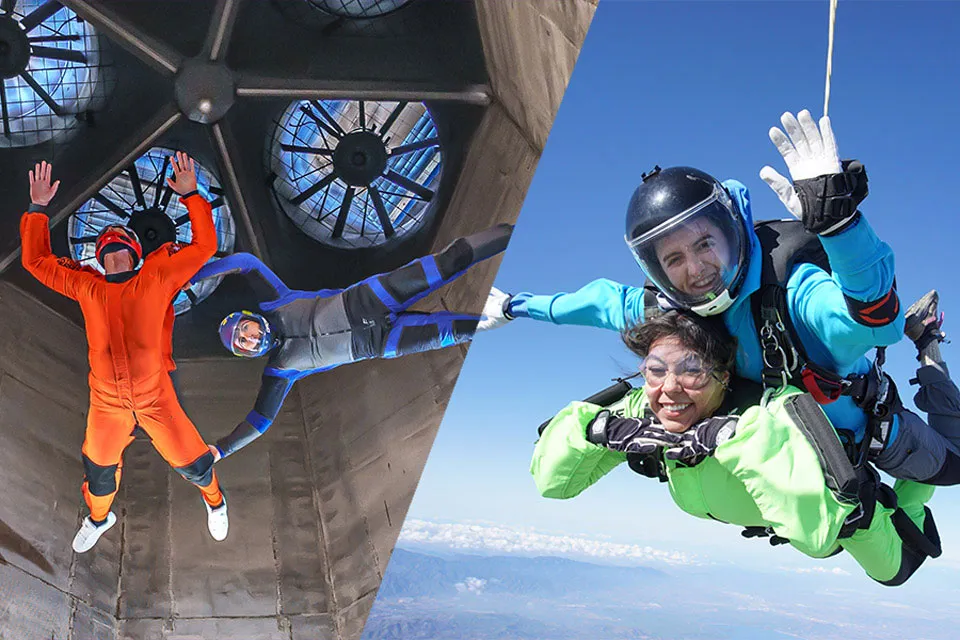
While the low individual cost of static line jumps looks appealing, the extended timeline often inflates the total cost of reaching a license. This highlights the value of using a hybrid approach that combines wind tunnel time with standard freefall training. Building core control skills in a controlled indoor environment before heading to the airfield can save thousands of dollars in aircraft fees.
Detailed Cost Optimization Scenarios
Scenario A: The Compressed Timeline Student
A trainee secures a $3,500 budget and books a two-week vacation to focus exclusively on their licensing course at a high-volume turbine dropzone.
-
Constraints & Structural Demands: The student must complete all twenty-five required jumps within a tight fourteen-day window, making them highly vulnerable to bad weather.
-
Decision Points: If wind or rain delays jumps for four days, the student must decide whether to extend their trip or pause training and face currency decay risks.
-
Failure Modes: Attempting to rush through multiple advanced jumps in poor weather can lead to bad habits and failed safety evaluations.
-
Second-Order Effects: Completing the program quickly builds excellent muscle memory, which prevents retraining fees and leaves extra room in the budget for safety gear.
Scenario B: The Pay-As-You-Go Static Line Progression
A participant decides to fund their training out of pocket, spending $150 per week on a static line course at a small, weekend-only dropzone.
-
Constraints & Structural Demands: The dropzone relies on a single Cessna 182, meaning any aircraft maintenance issues can completely halt training operations.
-
Decision Points: When mechanical delays push the student past the thirty-day currency window, they must choose between paying for a repeat jump or pausing until the next season.
-
Failure Modes: The extended schedule frequently results in skills fading, causing the student to get stuck in a costly loop of repeating early levels.
-
Second-Order Effects: The long timeline strains their budget, leaving little capital for gear and delaying their progress toward independent solo jumps.
Scenario C: Sourcing Used Gear in the Off-Season
A newly licensed jumper sets aside $4,000 in the autumn to piece together their first complete set of gear before the spring season begins.
-
Constraints & Structural Demands: The used market requires buyers to inspect components carefully to avoid purchasing outdated or damaged gear.
-
Decision Points: The jumper must decide whether to buy an older container that fits their current parachute size or invest in a newer harness that requires a smaller canopy.
-
Failure Modes: Buying a container without getting an independent rigger’s inspection can leave the jumper stuck with uncertified, unwearable gear.
-
Second-Order Effects: Finding a well-maintained used rig saves significant money, allowing the jumper to spend more on jump tickets when the season starts.
Scenario D: The Cross-Country Training Relocation
An individual calculates that traveling to a year-round training facility in an optimal climate is more cost-effective than training locally at an expensive, weather-dependent dropzone.
-
Constraints & Structural Demands: This choice requires managing upfront travel and lodging costs alongside standard training fees.
-
Decision Points: The student must balance the savings of cheap local housing against the convenience of staying directly at the airfield.
-
Failure Modes: Failing to account for local transportation costs can quickly drain their budget, leaving them short on funds for their final check rides.
-
Second-Order Effects: Training in a consistent climate allows for rapid skill progression, helping the student secure their license ahead of schedule.
Comprehensive Capital Outlay Architecture
Navigating the costs of aviation training requires breaking your budget down into distinct financial phases. This structured view prevents unexpected expenses from interrupting your progression.
Phase One: Primary Licensing Investments
This initial phase covers ground school, instructor fees, rental gear, and logbook administrative costs. These expenses represent the baseline investment required to secure a solo license.
Phase Two: Post-Licensing and Intermediate Equipment
After earning a license, renting gear can quickly become a major financial drain. This phase focuses on transitioning to owned equipment to stabilize your ongoing costs.
Overall Budget Allocation Breakdown
The following table outlines the financial expectations for a standard training and equipment acquisition timeline.
Strategic Infrastructure Tools and Resource Platforms
Regional Training Package Optimization
Many large dropzones offer discounted all-inclusive packages that cover everything from ground school to your final licensing jumps. Paying for these programs upfront often secures significant discounts compared to buying jumps individually. These packages usually include free gear rentals throughout your training, eliminating a common recurring cost.
Used Equipment Platforms
Online equipment registries and dropzone gear boards are valuable resources for finding affordable, pre-owned gear. These platforms allow jumpers to locate certified equipment without paying retail prices. When using these networks, buyers should route all transactions through an independent parachute rigger to verify the gear’s airworthiness before completing the purchase.
Wind Tunnel Training Efficiency
Using indoor wind tunnels can significantly accelerate your learning curve. The continuous airflow of a tunnel allows students to practice body flight maneuvers without the added costs of aircraft fuel and pilot fees. Ten minutes of focused tunnel coaching can deliver the same skill development as multiple full freefall skydives, protecting your budget from expensive retraining cycles.
Financial Risks and Secondary Failure Modes
Chronic Underfunding
Entering a training program without enough backup capital is a common financial trap. If an unexpected expense or repeated level drains your funds early, your training will grind to a halt. The resulting delay can cause skills to fade, forcing you to pay for refresher jumps later and increasing the overall cost of your license.
Purchasing Incompatible Used Equipment
Buying cheap used gear without verifying compatibility can be an expensive mistake. Parachute containers are built to hold very specific ranges of canopy sizes. If you buy components that do not fit together correctly, you will face unexpected modifications or resale losses that stretch your budget thin.
Hidden Maintenance Overhead
The purchase price of used gear is rarely the final cost. Parachute systems require regular maintenance, including reserve repacks every 180 days and canopy line replacements over time. Failing to budget for these ongoing safety requirements can leave you with unairworthy equipment right when you are ready to jump.
Long-Term Capital Maintenance and Value Upkeep
Managing the Rigging Cycle
Owning a parachute requires a strict maintenance schedule to protect both its safety and its resale value. Federal regulations require reserve parachutes to be inspected and repacked every 180 days by a certified rigger, regardless of whether they have been used. Missing this deadline makes the gear illegal to jump, forcing you back into expensive equipment rentals.
Off-Season Storage Practices
Proper storage preserves the life of your equipment and protects your investment during the winter months. Gear should be kept in a cool, dry, dark environment away from concrete floors and pest risks. Protecting the nylon fabric from humidity and UV light prevents premature aging, ensuring you get maximum value when it comes time to upgrade and resell your rig.
Tracking Equipment Lifecycles
Every component of a parachute system has a finite operational lifespan. Canopy fabrics lose their strength over hundreds of jumps, and safety devices have strict expiration dates set by manufacturers. Tracking these lifecycles in your logbook helps you anticipate maintenance costs and avoid sudden, unexpected expenses that can disrupt your season.
Financial Performance Tracking and Verification Systems
Using Capital Logbook Logs
To keep your finances on track, you should log your expenditures right alongside your jump data. This habit helps you connect your spending to clear skill milestones, making it easy to identify areas where you can optimize your costs.
Key Financial Indicators
-
Leading Indicators: Monthly savings rates dedicated to aviation; tunnel time secured before stepping onto the airfield.
-
Lagging Indicators: Net cost calculated per jump ticket over a season; total capital recovered during equipment resale.
-
Qualitative Signals: Your comfort level during gear inspections; the reliability of your local equipment network.
-
Quantitative Signals: Tracking the number of attempts needed to clear individual licensing levels.
Deconstruction of Financial Misconceptions
Myth: Skydiving is Only for the Wealthy
While the initial licensing phase requires a concentrated investment, the cost of the hobby drops significantly once you own your gear. Licensed jumpers at turbine dropzones often pay modest fees per slot, making the ongoing cost comparable to other high-velocity sports like skiing or scuba diving.
Myth: Buying Cheapest Gear Saves Money
Purchasing cheap, outdated gear is often a financial trap. Older equipment may not meet modern safety standards and can require expensive repairs from a rigger before it is cleared to fly. Investing in mid-life, widely compatible gear usually delivers much better long-term value.
Myth: Fragmented Training Saves Capital
Spreading your training jumps over a long period to break up the cost actually increases your total expenses. The resulting gaps lead to skill fade and mandatory currency jumps, which can quickly double your licensing costs compared to a compressed schedule.
Myth: Packing Your Own Main Canopy Saves Money Instantly
Learning to pack your own parachute is a great way to save money, but rushing into it without proper instruction can lead to poor packing habits and canopy malfunctions. It is better to pay for professional pack jobs early on while you build your packing skills under a rigger’s supervision.
Myth: Large Turbine Dropzones are Always More Expensive
While large regional facilities might seem pricier upfront, their fuel-efficient turbine aircraft allow them to offer cheaper individual jump tickets. They also tend to have larger rental gear inventories, which can save you money during your training progression.
Myth: You Can Skip the AAD to Save Money
Omitting an Automatic Activation Device from your gear budget is a dangerous and short-sighted choice. Most modern dropzones require all jumpers to use an AAD, meaning skipping this life-saving device will simply limit where you can legally jump.
Comprehensive Financial Optimization Synthesis
Managing an aviation budget requires structural discipline, operational foresight, and a clear understanding of your training timeline. True savings are not found by cutting corners on gear safety or looking for cheap, uncertified instruction. Instead, the most effective way to optimize your budget is to focus on training velocity and smart asset management. By grouping your jumps closely together, you can build muscle memory efficiently and avoid the unexpected costs of repeating lessons.
Long-term financial success in skydiving requires a clear view of your ongoing expenses. It demands maintaining a consistent jump schedule to protect your currency, planning for routine equipment maintenance, and sourcing compatible used gear. Balancing these financial priorities ensures that your progression remains steady and sustainable. By treating your skydiving expenses as a structured investment rather than a series of impulsive purchases, you can achieve your aviation goals safely and efficiently.