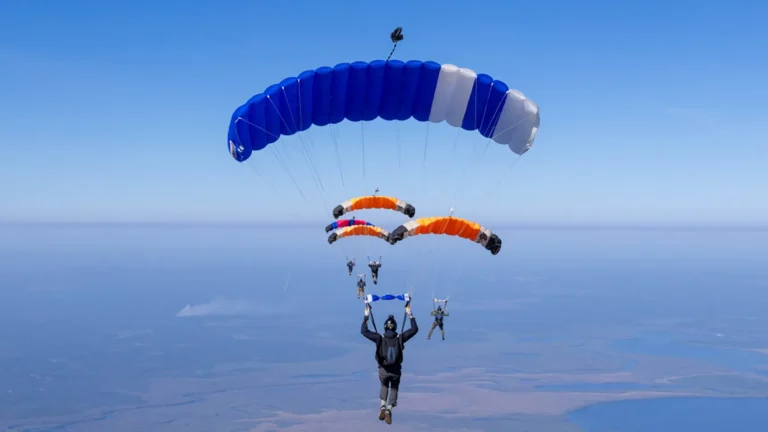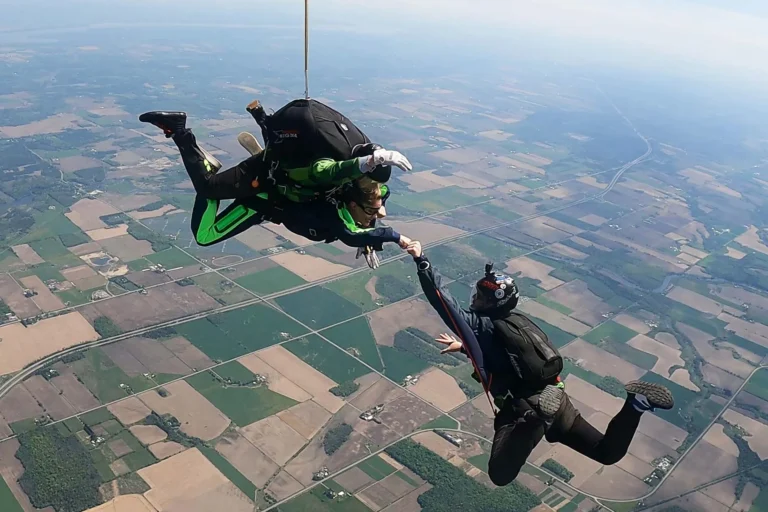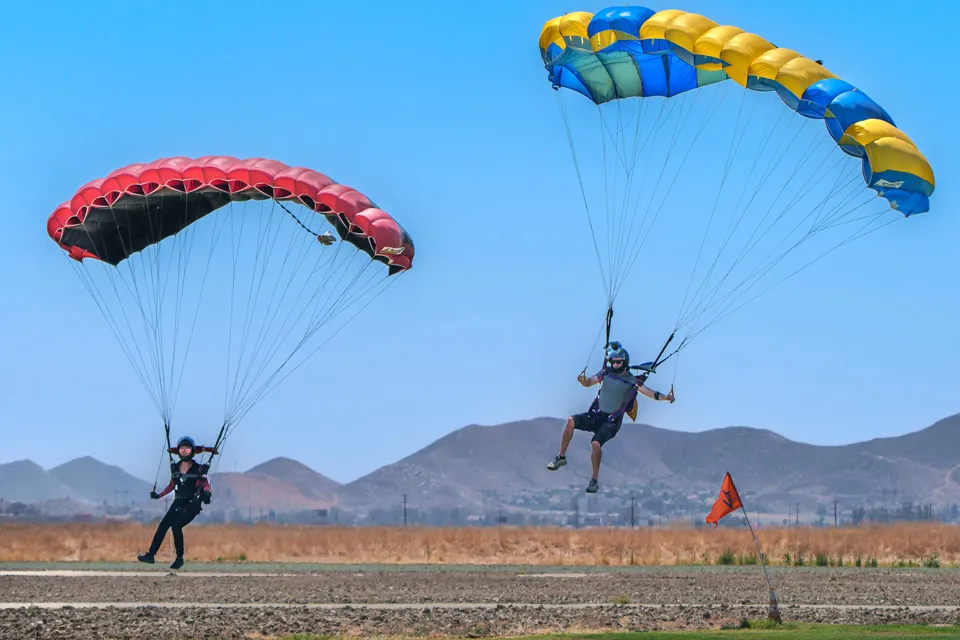
Common Skydiving Landing Mistakes: Canopy Flight Mechanics, Boundary Layer Turbulence, and Safety Protocols
The termination phase of a sport parachuting flight represents the most fluid, highly concentrated risk profile within the entire jump sequence. While public perception identifies freefall or mechanical canopy deployment as the primary sources of danger, statistical aviation evidence confirms that the final three hundred feet of descent present the greatest potential for severe error. The interaction between human visual perception, mechanical flight control lines, and localized micro-climatic boundary conditions leaves a narrow margin for technical miscalculation.
Fluid Dynamics at Lower Elevations
Parachute canopy flight is governed by the unchanging laws of fluid dynamics, airspeed maintenance, and wing pressurization. A modern ram-air canopy functions as an inflating, flexible airfoil that requires a steady stream of relative wind to maintain structural rigidity and lift force. As the wing enters the lower layers of the atmosphere, it moves into an environment heavily influenced by ground friction, man-made obstacles, and thermal temperature variations. These ground-level forces can rapidly alter the parachute’s internal cell pressure, catching unprepared pilots off guard during critical control movements.
Mitigating Descent Hazards
Systematically reducing descent accidents requires a deep, objective understanding of how common pilot errors combine with local airfield hazards. Safety in the landing zone is not a matter of luck; it is a direct consequence of precise pattern navigation, well-timed flare adjustments, and clear situational awareness. This analytical guide deconstructs the physical and cognitive elements of final approach navigation, establishing an authoritative technical reference for safety coordinators, instructional personnel, and sport aviators seeking to optimize their canopy flight safety.
Understanding “common skydiving landing mistakes”
Analyzing common skydiving landing mistakes requires moving past the superficial advice found in basic consumer sporting materials. Standard instructional pamphlets often describe landing accidents as simple instances of bad timing or poor balance during the final flare. A rigorous technical investigation, however, reveals that these errors are rooted in specific breakdowns of aerodynamic management, visual spatial tracking, and landing pattern discipline.
Recognizing Visual Perception Errors
A major area of interest is the breakdown of visual estimation during the final approach phase, often called the low-altitude panic turn. When a jumper experiences visual illusions caused by uniform grass airfields or fast-moving ground objects, they often misjudge their actual height above the ground. This misjudgment can prompt them to make sharp, sudden steering inputs at dangerously low altitudes to avoid overshooting their target. These low-altitude turns can cause the canopy to dive and lose lift, frequently leading to hard impacts before the wing can recover its stable shape.
Deconstructing Pattern Deficits
Furthermore, the physical forces experienced during a final landing approach change based on how the jumper coordinates their brake lines. Pulling the control toggles asymmetrically near the ground alters the wing’s balance, causing one side to stall while the other speeds up. This unexpected imbalance can cause the canopy to roll sharply and drop toward the ground, increasing the risk of an impact. This analysis breaks down these hidden factors, providing a clear roadmap for identifying and correcting dangerous flight habits before they compromise safety.
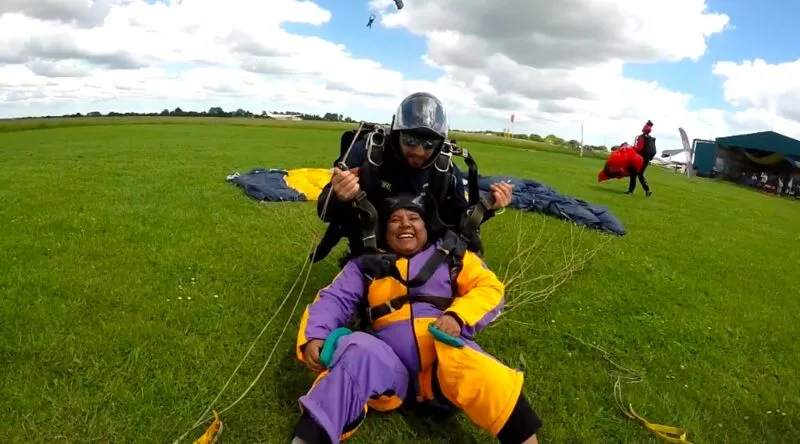
Historical and Technological Evolution of Canopy Control
The Evolution of Parachute Flight
The development of parachute landing safety mirrors the transition of the sport from circular, drag-dependent military escape equipment to highly responsive, rectangular wing designs. Post-World War II civilian jumping relied on modified military surplus round parachutes that lacked forward drive and offered very little steering control. These round canopies could not be flared to slow down for a landing, meaning the jumper hit the ground at the full speed of their descent. Survival depended entirely on mastering physical impact techniques like the Parachute Landing Fall (PLF) to absorb the heavy landing forces across the body.
The Rise of Ram-Air Technology
The introduction of the multi-cell ram-air canopy in the 1970s revolutionized landing physics by giving jumpers access to a true, flexible wing. These nylon structures use forward speed to force air into open front cells, inflating the fabric into a rigid wing shape that can generate significant aerodynamic lift. This design allowed jumpers to steer precisely and flare their canopies—pulling the tail down to slow their descent right before touching the ground. This technology made soft, stand-up landings possible, shifting the focus of training from physical impact absorption to precise aerodynamic control.
The Complexity of Modern Wings
In the modern aviation environment, the development of high-performance elliptical canopies and cross-braced wings has introduced new safety challenges to the landing field. These advanced designs fly at much higher speeds, allowing experienced pilots to execute high-speed turns near the ground to glide long distances across the grass—a practice known as swooping. While these modern wings offer incredible performance, their high speeds significantly increase the risk of severe landing errors, requiring advanced training and strict safety rules to manage safely.
Analytical Models and Boundary Layer Frameworks
The Boundary Layer Wind Gradient Model
Evaluating final approach safety requires a clear understanding of how surface friction alters wind speeds close to the ground. The Boundary Layer Wind Gradient Model explains how obstructions like trees, hangars, and uneven terrain slow down moving air near the surface, creating distinct layers of changing wind speeds. A canopy flying downward through these layers can experience a sudden drop in headwind speed, causing the wing to lose airspeed and drop unexpectedly right before landing. This model helps jumpers anticipate this loss of lift, allowing them to maintain steady control and avoid stalling the wing at low altitudes.
The Symmetrical Flare Optimization Model
The Symmetrical Flare Optimization Model analyzes how the position and timing of your brake line inputs influence landing lift. To achieve a soft landing, a pilot must pull both steering toggles down smoothly and evenly, changing the wing’s angle to trade forward speed for maximum vertical lift right above the ground. Pulling the brakes too early can cause the canopy to climb and stall before you reach the ground, while flaring too late does not slow you down enough. This model maps the precise movement path needed to maximize lift, helping pilots adjust their timing for different wind conditions.
The Flight Pattern Sector Analysis Matrix
The Flight Pattern Sector Analysis Matrix divides the airspace around a drop zone into strict operational zones: the downwind leg, the base leg, and the final approach run. This structured layout requires jumpers to fly a predictable box pattern, making it easy for air traffic control and other jumpers to track their path. Following this matrix ensures all participants maintain safe separation distances during their final descents, preventing chaotic flight lines and reducing the risk of mid-air collisions near the landing zone.
The Cognitive Workload Overload Framework
Navigating a busy landing field demands high mental focus to track changing winds, obstacles, and other parachutes simultaneously. The Cognitive Workload Overload Framework explains how high stress can cause a jumper’s focus to narrow, leading them to fixate on a single obstacle while losing track of their overall flight path. Training programs use repetitive simulation and mental visualization to turn basic pattern flying into automatic reflexes. This preparation keeps the jumper’s mind clear to handle unexpected wind shifts or traffic changes safely.
Structural Categories of Approach Failures
Low-Altitude Panic Turns
Low-altitude panic turns represent one of the most hazardous errors a parachute pilot can make during their final approach run. These sudden turns usually happen when a jumper realizes they are drifting away from their target and makes a sharp, aggressive steering input close to the ground. This sharp turn forces the canopy into a steep dive, causing it to lose altitude rapidly as it picks up speed. Because the wing needs space to recover its flat flight shape, executing these turns at low altitudes often leads to hard impacts before the canopy can regain stable lift.
Asymmetric Toggle Inputs
Asymmetric toggle inputs occur when a pilot pulls their steering lines unevenly during the final flare sequence, causing the wing to behave unpredictably right above the ground. Pulling one hand lower than the other distorts the canopy’s shape unevenly, causing one side to slow down while the other continues flying at full speed. This difference drops one wingtip toward the grass, sending the canopy into an unexpected roll close to the ground. Avoiding this issue requires keeping your hands level and applying smooth, even pressure to both toggles throughout the landing run.
Premature High Flares
Premature high flares happen when a jumper misjudges their height and pulls their steering toggles all the way down too early, often fifteen to twenty feet above the grass. This sudden movement causes the canopy to climb briefly before it runs out of speed, stalls, and drops vertically toward the ground. Because the wing has lost all its airspeed, the pilot can no longer control the descent, leading to a hard impact. Managing this issue requires a progressive, two-stage flare that slows the canopy smoothly as you approach the ground.
Downwind Approach Management Issues
Landing with the wind blowing from behind you—a downwind landing—presents significant handling challenges due to your increased ground speed. Some jumpers panic when they see the ground passing by so quickly and make sharp turns near the ground to try and face into the wind, which often results in a low-altitude turn accident. Safe downwind landings require staying committed to a straight flight path, executing a smooth, full flare to slow your descent, and using a parachute landing fall to slide out the extra speed safely.
Real-World Flight Scenarios and Decision Logic
Scenario A: Navigating a Severe Low-Altitude Wind Gradient
An intermediate jumper enters their final landing pattern on a hot summer afternoon, tracking a steady ten-knot headwind at 500 feet. As they drop past one hundred feet, they pass through a sharp wind gradient created by a row of tall trees upwind of the runway, causing the headwind to drop instantly to two knots.
The sudden loss of headwind causes the canopy to pitch forward and lose lift, dropping the jumper toward the ground faster than expected. Instead of panicking and pulling the toggles down sharply, the jumper stays calm, maintains level hands, and executes a smooth, progressive flare to cushion the landing. The wing responds well, allowing the jumper to make a safe, standing touchdown despite the sudden loss of wind lift. This scenario highlights why it is vital to stay relaxed and maintain smooth control inputs when encountering unexpected wind shifts near the ground.
Scenario B: Recovering from a Premature High Flare
During a weekend jump at a high-elevation airfield, a participant misjudges their height over the uniform runway and executes a full landing flare twenty feet above the grass. The canopy climbs slightly, stops its forward movement, and begins to stall, leaving the jumper floating precariously above the ground with no remaining airspeed.
The jumper recognizes the stall immediately and avoids the common mistake of letting the toggles up quickly, which would cause the canopy to dive sharply into the ground. Instead, they hold their hands steady at a half-brake position, keeping the wing level as it sinks, while tucking their elbows in and preparing for a hard landing. They touch down heavily but roll smoothly across the grass using a standard parachute landing fall, absorbing the impact safely without injury. This example shows how maintaining a stable half-brake hold can save a jumper from serious injury during an early flare.
Scenario C: Handling Traffic Congestion in a Shared Landing Pattern
A student jumper turns onto their final approach run at 300 feet and notices another parachute canopy drifting directly into their path from the side. The other jumper is flying a erratic pattern, creating an immediate risk of a low-altitude collision if both pilots maintain their current paths.
The student immediately checks their surroundings and determines they have enough clear air to make a gentle, controlled turn away from the traffic. Using a smooth, shallow toggle input, they steer five degrees into an open grassy clearing away from the main target group, maintaining a level wing throughout the adjustment. They complete their approach safely and flare to a soft touchdown in the clear zone, showing how staying alert and flexible can help you navigate crowded landing patterns without resorting to dangerous, sharp turns.
Economic Overhead, Capital Costs, and Training Resource Allocation
Developing high-level canopy flight skills requires a well-planned financial investment that goes far beyond buying your initial set of skydiving gear. Parachute wings are high-precision textile structures that require regular maintenance, suspension line trimming, and professional safety inspections to perform reliably.
The Cost of Advanced Flight Training
Enrolling in structured canopy coaching courses represents one of the most effective ways to invest your training capital. These advanced programs utilize high-speed ground cameras and detailed video reviews to track your landing approach patterns, flare timing, and body positioning on every jump. Working with a dedicated coach helps you identify subtle habits, such as uneven toggle pressure or poor altitude estimation, before they lead to an accident. This training investment helps prevent costly gear damage and ensures a long, safe career in the sport.
Long-Term Line Maintenance Costs
The ongoing friction generated by your slider during deployment creates significant heat that can warp or shrink your canopy’s suspension lines over time. A parachute system that is out of trim flies less predictably, experiences rougher openings, and loses flare authority during landings. Budgeting for regular line checks and replacing your line sets every five hundred jumps ensures your wing continues to fly according to factory specifications, protecting your safety margins during every descent.
Instrumentation Systems, Technological Tools, and Support Aids
Navigating a busy landing field safely requires combining reliable onboard flight instruments with real-time weather monitoring tools on the ground. These systems provide critical altitude and speed data, helping pilots make smart decisions throughout their descent.
Precision Electronic Altimeters
Modern digital altimeters utilize highly sensitive barometric pressure sensors to track your altitude continuously, providing real-time height updates throughout your flight. These electronic instruments feature high-contrast screens that make it easy to verify your exact height above the ground during your final turns. Relying on an accurate digital altimeter helps you time your pattern turns precisely, reducing the risk of altitude errors that can lead to dangerous low-altitude adjustments.
Helmet-Mounted Audible Altimeters
Audible altimeters provide a vital hands-free safety backup by playing distinct warning tones inside your helmet as you pass specific height thresholds. A typical configuration programs distinct alerts for your downwind turn, your base leg turn, and your final approach run. These auditory cues help you maintain high situational awareness without needing to stare at your wrist instrument, keeping your eyes free to track other traffic and ground obstacles throughout the landing pattern.
The Risk Matrix: Compounding Environmental Hazards
The safety of a landing run can be quickly compromised when subtle pilot errors interact with changing environmental hazards. Jumpers who perform well in calm morning air can face unexpected challenges when exposed to the turbulent air patterns that develop during hot afternoon flights.
Mechanical Turbulence Near Ground Obstacles
When strong winds encounter large structures like hangars, trees, or fences, they break apart into spinning vortexes of turbulent air downwind of the obstacle. A parachute flying through this mechanical turbulence can experience sudden shifts in cell pressure, causing the wing to pitch or roll unexpectedly close to the ground. Managing this hazard requires studying the airfield layout beforehand and planning your landing path to stay well away from the turbulent zones downwind of major structures.
Thermal Updrafts and Downdrafts
On warm, sunny days, the sun heats different ground surfaces unevenly, creating rising columns of warm air known as thermals alongside pockets of sinking cool air. A canopy flying through a thermal can experience a sudden burst of lift that disrupts its landing pattern, while a downdraft can cause the wing to drop toward the ground faster than anticipated. Staying alert for these thermal changes helps you maintain steady control inputs, preventing you from over-correcting and stalling the wing near the ground.
Unfamiliar High-Elevation Landing Sites
Jumping at high-altitude inland airfields introduces significant changes to your landing physics due to the thinner air layers found at higher elevations. This thin air reduces the aerodynamic lift generated by your canopy, resulting in faster forward speeds and quicker descent rates than you experience at sea level. If a visitor fails to adjust for this increased speed, they may find their normal flare timing leaves them short of a smooth landing. Managing this risk requires extending your flare smoothly and holding it longer to bleed off the extra speed safely.
Continuous Airworthiness, Logbook Governance, and Site Recency
The Value of Regular Flight Currency
Earning your skydiving license demonstrates your competence, but maintaining your landing skills requires consistent, ongoing practice. Parachute flight control relies on sharp muscle memory and accurate visual timing, both of which can dull after an extended break from jumping. If you have been away from the sport for several weeks, it is wise to make your first few return jumps on a larger, more forgiving canopy in calm wind conditions. This gradual return allows you to recalibrate your altitude awareness and flare timing safely.
Keeping Detailed Flight Logs
Maintaining an accurate, detailed logbook is a critical practice for tracking your skill development and monitoring your landing performance over time. A well-kept logbook records key data for every jump, including wind speeds, landing accuracy, flare timing adjustments, and any handling issues encountered during the flight. Reviewing these personal records regularly helps you spot recurring patterns in your performance, such as a tendency to flare too early in light winds, allowing you to focus your training on areas that need improvement.
Quantitative Flight Metrics and Qualitative Signal Tracking
Leading vs. Lagging Indicators of Landing Safety
Evaluating your canopy safety requires tracking both historical performance data and real-time operational indicators. Your total jump count is a lagging indicator; it reflects your past experience but does not guarantee your current safety habits are sound. Leading indicators offer a much clearer view of your day-to-day safety culture. These metrics include how consistently you follow a structured landing pattern, your accuracy in hitting designated targets, and how strictly you stick to your personal wind limits.
Spotting Signs of High Canopy Competence
Beyond reviewing raw flight numbers, pilots can evaluate their skill development through qualitative observation of their canopy’s behavior. A highly competent pilot displays smooth, incremental control movements, keeps their wing level throughout final approach adjustments, and executes clean, two-stage flares consistently. They land softly on their feet in a wide variety of wind conditions, demonstrating complete control over the wing. This level of control shows that the pilot understands the aerodynamics of their canopy thoroughly, relying on skill rather than luck to secure safe landings.
Utilizing Landing Video Analysis
Reviewing video footage of your landings provides an invaluable tool for identifying and correcting subtle approach errors. High-definition ground video allows you to study your flight path frame-by-frame, checking your exact height above the grass when you start your flare, the symmetry of your toggle movements, and your body positioning during touchdown. Comparing your video logs against ideal flight models helps you spot errors like flared hands rising too early or uncoordinated leg movements, giving you the clear insights needed to refine your technique.
Deconstructing Aerodynamic Fallacies and Industry Misconceptions
The Fallacy that Upwind Landings are Always Free from Hazard
A common misconception among recreational jumpers is assuming that facing directly into the wind guarantees a safe, easy landing every time. While a headwind does slow your ground speed down nicely, it can also hide poor flare technique by cushioning your touchdown even if your toggle movements are uneven or mistimed. Relying too much on a strong headwind can leave you unprepared for the faster ground speeds you will encounter when landing in light or variable winds, where precise technique is required.
The Misconception that Smaller Canopies Handle Wind Turbulence Better
Many intermediate jumpers believe that downsizing to a smaller, faster canopy is a smart way to handle turbulent afternoon winds, assuming the higher wing loading will cut through rough air cleanly. In reality, smaller canopies fly at much faster speeds and react far more sharply to control inputs, which significantly shortens your reaction time if you encounter a sudden gust or wind shear near the ground. True safety in turbulent air comes from flying a familiar, well-trimmed wing conservatively, rather than relying on a high-performance design to muscle through rough weather.
The Illusion that Letting Toggles Up Resolves a High Flare
When a jumper realizes they have flared too early and are floating high above the ground, a common instinctive reaction is to let the steering toggles up quickly to reset the canopy. This movement is an aerodynamic error; raising the toggles abruptly causes the wing to pitch forward instantly, sending the jumper into a steep, high-speed dive directly into the ground. Once a flare has been started early, the correct recovery technique is to hold your hands steady in a half-brake position, keeping the wing level as it sinks smoothly to absorb the landing forces with a standard parachute landing fall.
Ethical, Practical, and Regulatory Dimensions
When jumping at different airfields around the world, pilots must navigate distinct local landing rules and airspace regulations established by regional aviation authorities. A flight pattern approach that is standard at a large, wide-open rural hub may be strictly banned at a smaller metropolitan field due to local noise ordinances or nearby commercial flight paths. Visiting jumpers have an operational responsibility to study the local drop zone rules thoroughly, attend comprehensive safety briefings, and adapt their flight lines to match the host facility’s safety guidelines perfectly.
Furthermore, the growth of high-speed swooping has created clear spatial conflicts with traditional, slower landing patterns on shared fields. Airfields manage this risk by separating high-speed pilots from standard traffic, utilizing dedicated swooping ponds or distinct grassy clearings away from student zones. Maintaining this separation requires high discipline from all participants, ensuring everyone respects the designated landing zones to prevent dangerous near-misses and maintain a safe, collaborative environment for all disciplines.
Systemic Synthesis of Parachute Landing Excellence
Our structural analysis of common skydiving landing mistakes demonstrates that achieving consistent safety in the landing zone relies on a deep respect for aerodynamic principles and disciplined pattern management. Avoiding low-altitude turns, uncoordinated toggle movements, and mistimed flares requires looking past basic survival instincts to execute precise, well-drilled flight procedures. Visual accuracy and hitting the center target should always be secondary to maintaining a level wing, keeping steady hand positioning, and following a predictable approach pattern.
As canopy manufacturing technology continues to advance and digital wind tracking tools become more precise, jumpers will have access to better data to plan their flights. However, the core requirements of sharp altitude awareness, smooth flare execution, and honest self-evaluation remain completely unchanged. By treating every landing run as a precise aviation maneuver that requires careful study and planning, aviators can explore the skies safely, protecting their longevity in the sport and ensuring a secure, rewarding career in human flight.