Metric-Based Analysis for Student Jumpers: Compare Skydiving Schools
Selecting an aviation training facility for parachute progression requires a thorough analysis of operational variables that go far beyond basic geographic convenience. For a student jumper, this choice shapes their entire understanding of risk management, gear maintenance, and emergency procedures. The commercial skydiving landscape includes everything from small, weekend operations using single-engine piston planes to massive, year-round turbine hubs that handle thousands of jumps annually. Navigating these options demands a structured evaluation framework that focuses heavily on verifiable safety metrics and instructional quality.
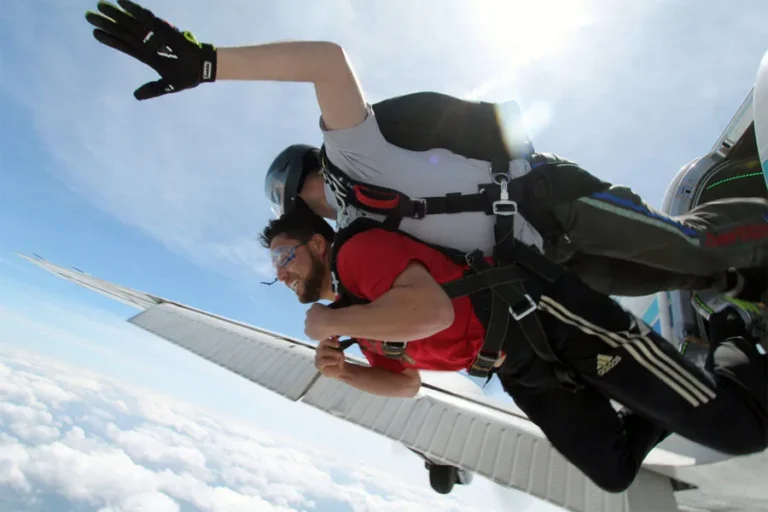
The decision-making process is often complicated by the flashy marketing materials used by modern tourism dropzones, which tend to blur the line between one-time tandem rides and serious student training. A tandem experience focuses primarily on guest hospitality and basic passenger comfort. In contrast, an Accelerated Freefall (AFF) or Integrated Student Program (ISP) requires a deep educational commitment from both the facility and the student. Aspiring solo jumpers must look past beachfront views or slick promotional videos, focusing instead on instructor-to-student ratios, rigger availability, and dedicated landing zones.
From an engineering and aviation perspective, a dropzone operates as a complex transportation system where aircraft efficiency, weather patterns, and equipment wear intersect daily. Choosing where to invest your training capital requires analyzing how these factors impact your progression rate. A school with slow climb times or limited instructor availability can drag out your training over months, increasing your costs and causing your hard-earned muscle memory to fade between jumps. This editorial analysis breaks down the structural differences among training facilities, providing a reliable reference for students who want to evaluate their options using cold, objective data.
Understanding “compare skydiving schools”
Multi-Perspective Educational Evaluation
When students begin to compare skydiving schools, they must look at the process from three distinct angles: aviation safety, educational design, and financial efficiency. From an aviation perspective, the dropzone is a live environment where aircraft maintenance schedules, pilot training, and air traffic control communication directly affect daily safety margins. If a school cuts corners on plane maintenance, your safety is compromised before you even put on a parachute.
From an educational standpoint, skydiving requires a clear, structured curriculum that transforms intense sensory overload into calm, repeatable physical actions. A top-tier school uses detailed video debriefs, precise wind tunnel training, and clear progression logs to help students master freefall stability and canopy control. Financially, an efficient school keeps your training moving steadily, saving you money by preventing the need for costly retraining jumps caused by long delays.
Common Evaluation Oversimplifications
The most frequent mistake students make when trying to compare skydiving schools is relying solely on the flat package price listed on a website. These surface-level numbers often hide hidden costs, such as gear rental fees, mandatory ground school textbooks, packing lessons, or lift tickets for your instructors. A cheap upfront package can quickly become more expensive than a premium, all-inclusive program once these essential line items are added to your final bill.
The Risk of Relying on Consumer Reviews
Relying too heavily on standard online consumer reviews introduces significant bias, because the vast majority of those ratings come from one-time tandem passengers. A five-star rating based on an exciting tandem experience tells you absolutely nothing about the school’s ability to train independent solo jumpers. Tandem passengers are rarely qualified to judge a dropzone’s mechanical maintenance, the depth of its student emergency briefings, or the safety of its packing room protocols.
Historical Progress and Training Evolution
The Static Line Training Era
The structured methodology of modern student skydiving grew out of military parachute training techniques developed during the mid-twentieth century. Early civilian clubs relied almost entirely on the static line progression system, where a cable attached to the aircraft automatically deploys the student’s parachute immediately upon exit. This older method focused heavily on basic canopy survival skills rather than freefall control, meaning students spent very little time practicing stability in the air before opening their chutes.
The Invention of Accelerated Freefall
The training landscape changed dramatically in the late 1970s and early 1980s with the creation of the Accelerated Freefall (AFF) program. This innovative system allows students to experience direct, high-altitude freefall on their very first jump while being physically held by two certified instructors. This hands-on coaching model accelerated the learning curve, allowing students to practice high-speed body control, turns, and forward movement under close supervision from day one.
Integrating Wind Tunnel Technology
Over the last two decades, the widespread availability of vertical wind tunnels has revolutionized how elite skydiving schools teach body flight. Instructors can now isolate and correct a student’s stability issues inside a controlled indoor environment before they ever step foot in an airplane. This integration has significantly lowered student failure rates on actual skydiving jumps, making wind tunnel access a critical factor when you compare skydiving schools.
Conceptual Frameworks for Dropzone Evaluation
Operational Throughput Efficiency
The concept of operational throughput measures how efficiently a training center moves students through its curriculum without compromising safety or educational quality. High-capacity dropzones use dedicated multi-engine turbine aircraft and automated manifest systems to maintain a steady flow of flights throughout the day. This operational efficiency is vital for students, as it ensures they can complete multiple jumps per weekend to reinforce their newly learned skills.
The Student Safety Buffer Model
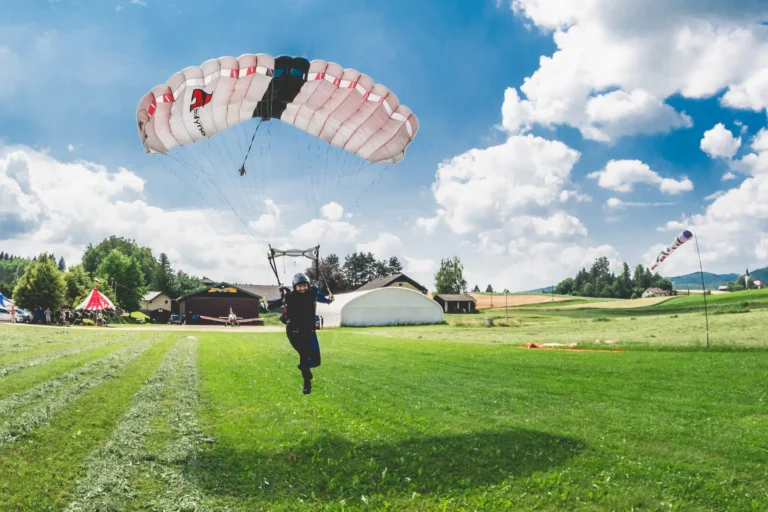
The student safety buffer model evaluates the physical margins of safety built into a dropzone’s daily training environment. This framework examines key physical features, such as the size and condition of the student landing field, the complexity of local air traffic, and the proximity of hazardous obstacles like power lines or highways. A school with a sprawling, unobstructed grass landing area gives students a much larger margin for error during their initial solo canopy approaches.
Instructional Continuity Metrics
Instructional continuity measures how consistently a student works with the same coach or team of instructors throughout their licensing program. When a school assigns a dedicated mentor to a student, that instructor can track subtle progress details and tailor their feedback precisely to the student’s learning style. Conversely, a dropzone that constantly rotates students through a large pool of freelance instructors often suffers from fragmented feedback and repetitive lessons.
Categorization of Training Environments
The operational profiles, equipment choices, and training structures of skydiving schools vary significantly based on their regional weather patterns and business models.
Assessing Airframe Impacts on Learning
This comprehensive categorization shows that the choice of aircraft directly shapes your daily learning environment. A national turbine hub climbing to 14,000 feet in under ten minutes gives students twice as much freefall practice time per jump as a small piston plane that tops out at 10,000 feet after a slow, thirty-minute climb. These shorter flight times keep students mentally focused and physically energized, allowing them to get more out of every training jump.
Real-World Operational Scenarios
Scenario A: Weather Delays and Fleet Disruptions
A student arrives at a regional flight center early on a Saturday morning to complete their final three solo qualification jumps. By mid-morning, an unexpected low cloud layer rolls in, halting all student operations for several hours while the turbine plane sits idle on the tarmac.
-
Constraints & Operational Demands: Student skydiving operations require specific cloud clearance and wind conditions to ensure the jumper can see and navigate back to the landing field safely.
-
Decision Points: The school management must decide whether to keep students waiting indefinitely or pivot to indoor classroom training, such as mock-up harness drills and emergency procedure reviews.
-
Failure Modes: Resuming student flights too quickly before a cloud layer fully clears can disorient a new jumper, risking an off-field landing or an airspace violation.
-
Second-Order Effects: Extended weather delays create massive backlogs in the student manifest, forcing the school to extend its operating hours or push student jumps to the following weekend.
Scenario B: Tracking Canopy Control in Busy Airspace
During a busy summer afternoon at a high-volume national hub, a student exits the aircraft at 14,000 feet alongside several groups of experienced sport jumpers and high-speed tandem pairs.
-
Constraints & Operational Demands: The student must successfully navigate a large, slow-moving training canopy through a crowded sky while keeping a safe distance from faster, high-performance wings.
-
Decision Points: The ground control instructor using radio communication must decide when to issue steering commands to the student to maintain a clean landing pattern.
-
Failure Modes: If the student ignores their pre-flight flight plan or loses track of their altitude, they risk wandering into the high-speed landing lane used by advanced swoopers.
-
Second-Order Effects: A traffic conflict in the sky forces other jumpers to execute evasive turns close to the ground, which can disrupt the entire landing flow and delay subsequent plane takeoffs.
Scenario C: Handling an In-Flight Equipment Discrepancy
As a student is riding the airplane past 8,000 feet during the climb, their instructor notices that one of the student’s main leg strap buckles has shifted and loosened slightly due to shifting inside the cabin.
-
Constraints & Operational Demands: Every piece of safety harness equipment must remain perfectly secure and adjusted correctly to handle the high forces of parachute deployment.
-
Decision Points: The instructor must decide whether they can safely tighten and lock the buckle inside the crowded plane or if they need to cancel the jump and ride the aircraft back down.
-
Failure Modes: Attempting a quick fix while the plane is climbing can lead to missing other subtle gear issues, while ignoring the loose strap risks a harness failure during deployment.
-
Second-Order Effects: Choosing to ride the plane back down requires the pilot to adjust their descent rate to protect the passengers’ ears, which alters the flight schedule for the next group of waiting jumpers.
Scenario D: Managing Student Fatigue During an Intensive Course
A student enrolls in an intensive, week-long licensing course and attempts to complete five high-altitude training jumps a day during hot, humid mid-summer weather.
-
Constraints & Operational Demands: Skydiving requires constant mental alertness and rapid physical responses, both of which fade quickly when a jumper becomes physically exhausted.
-
Decision Points: The lead instructor must monitor the student’s focus during pre-flight dirt dives and decide when to pause jumps for the day, even if the student wants to keep going.
-
Failure Modes: Pushing through severe physical fatigue can cause a student to forget their emergency routines or miss their altitude checks during freefall.
-
Second-Order Effects: Forcing a break allows the student’s mind and body to rest, but it alters their training schedule and may require adding extra days to the course.
Financial Dynamics and Resource Allocation
When you compare skydiving schools, a clear understanding of financial structures is essential to avoid unexpected expenses that can stall your training.
Analyzing Flat Fees versus Pay-As-You-Go Pricing
Training facilities typically offer two main payment structures: upfront all-inclusive package deals or pay-as-you-go pricing for each individual jump. All-inclusive packages often provide excellent overall value by bundling ground school, gear rental, instructor lift tickets, and parachute packing fees into a single price. However, students must verify whether the package includes the cost of mandatory retraining jumps if they happen to fail a specific level.
The Long-Term Impact of Student Gear Rental Fees
Student gear rental is a major indirect cost that can add up quickly if your licensing program stretches over several months. Premium schools include modern, well-maintained student rigs in their base prices, while smaller clubs may bill you separately for gear use on every single jump. Evaluating these equipment policies upfront is a critical step when you compare skydiving schools to keep your overall budget under control.
Typical Investment Outlook for Licensing Programs
The following table outlines the standard capital investments and resource requirements for a complete solo skydiving licensing course.
Instructional Tools and Support Systems
Integrating Wind Tunnel Coaching
The inclusion of vertical wind tunnel training has become a true game-changer for modern skydiving education. Spending just fifteen minutes inside a flight chamber allows a student to practice freefall stability, clean turns, and forward movement without the pressure of a falling altitude gauge. This focused, indoor environment helps students build strong muscle memory quickly, allowing them to pass their actual in-air check dives with far fewer mistakes.
High-Definition In-Flight Video Analysis
Using high-definition video review during post-jump debriefs is a vital tool for correcting subtle body position errors. An instructor flying alongside a student can record their body angle, arm placement, and leg extension throughout the entire freefall. Reviewing this footage frame-by-frame in the classroom helps students see exactly what they need to fix, turning abstract advice into clear visual adjustments for their next jump.
Ground-Based Radio Canopy Guidance
Electronic radio systems allow ground instructors to guide students through their initial solo canopy flight patterns and final landing flares. This live, real-time audio support helps new jumpers navigate safely back to the landing zone while they are still learning to judge their altitude and wind drift. As the student gains experience and confidence under the canopy, the instructor gradually reduces radio input to help them become fully independent.
Risk Landscape and Compounding Hazards
Recognizing the Dangers of Skill Fade
Skill fade is a major hazard for student skydivers, particularly when bad weather or busy schedules cause long gaps between training jumps. The physical skills and emergency habits learned during ground school start to diminish after just a few weeks of inactivity. To counter this risk, high-quality schools require students to complete formal currency training and emergency drill reviews if they have been away from the sport for more than thirty days.
Navigating Peer Pressure and Group Mindsets
In a high-energy sport aviation environment, new students can easily fall into a group mentality or succumb to subtle peer pressure. This social dynamic can lead a student to ignore their personal limits, such as jumping in winds that are too strong for their skill level or rushing through gear checks to catch the next flight. Top dropzones prevent this by building a safety-first culture where students are actively encouraged to pause or cancel a jump if they feel uncomfortable.
Managing Hidden Hazards Near the Landing Zone
Every dropzone has a unique layout of nearby physical hazards, such as hidden power lines, changing wind currents near tall hangars, or deep drainage ditches running past the field. A student canopy pilot must learn to spot and plan for these hidden environmental risks during their pre-flight briefings. Schools that provide detailed, large-scale maps and dedicated safety briefings for their landing zones help students avoid these dangerous areas during their final approaches.
Regulatory Governance and Maintenance Standards
The USPA Integrated Student Program
In the United States, the United States Parachute Association (USPA) sets the gold standard for student skydiving education through its Integrated Student Program (ISP). This comprehensive curriculum breaks down training into clear, performance-based levels that students must master to earn their solo A-license. When you compare skydiving schools, verifying that a facility strictly follows the USPA ISP ensures your license will be recognized at dropzones worldwide.
FAA Airframe Maintenance Directives
Commercial skydiving aircraft must comply with strict Federal Aviation Administration (FAA) maintenance directives, including detailed airframe inspections every one hundred flight hours. These mandatory mechanical checks involve inspecting engine components, checking control cables for wear, and testing fuel systems under heavy loads. Choosing a school that employs full-time, on-site aviation mechanics ensures that aircraft are maintained to the highest safety standards.
Parachute Rigging Room Certification
The packing and maintenance of emergency reserve parachutes is tightly regulated by federal law, requiring a certified master rigger to inspect and repack every backup canopy every 180 days. This controlled environment protects the safety-critical fabrics from dust, humidity, and improper handling. Elite training facilities maintain clean, climate-controlled rigging rooms where certified technicians can inspect student gear thoroughly without any outside distractions.
Metrics for Performance Tracking
Using Objective Data to Track Student Success
Evaluating a skydiving school requires looking at concrete data points that reflect the facility’s overall safety standards and educational efficiency. Tracking key metrics helps students identify well-run operations that consistently graduate safe, confident solo jumpers.
Key Performance Indicators for Training Hubs
-
Leading Indicators: The ratio of certified safety officers to active students on the field; the frequency of mandatory emergency gear drills before daily flights.
-
Lagging Indicators: The percentage of students who pass their solo license exams on their first attempt; the frequency of off-field landing incidents across the student fleet.
-
Qualitative Signals: The clarity and focus of instructor feedback during post-jump video reviews; the cleanliness and organization of the main parachute packing area.
-
Quantitative Signals: The average number of days it takes a student to complete the twenty-five logged jumps required for an A-license.
Analysis of Common Industry Misconceptions
Myth: The Closest Dropzone Is Always the Best Choice for Training
Choosing a school based purely on driving distance can be a costly mistake if that local facility lacks the aircraft or instructors needed for steady progression. A student may save an hour on their morning drive but end up spending months stuck on the ground due to slow planes or manifest bottlenecks. Traveling further to a well-equipped national hub can actually save you time and money by letting you complete your license in a fraction of the time.
Myth: Every Certified Instructor Teaches the Exact Same Way
While all skydiving instructors must hold valid ratings from national aviation bodies, their personal teaching styles and experience levels vary significantly. Some instructors specialize in working with anxious beginners, using calm, detailed explanations to build confidence, while others focus on fast-paced tactical coaching. Finding a school that matches you with an instructor who fits your personal learning style is essential for a smooth training experience.
Myth: Modern Backup Devices Remove the Need for Manual Emergency Drills
Automatic activation devices are incredible lifesaving tools, but they are electronic backups designed only for worst-case scenarios, not a replacement for human skill. A student must practice their emergency handle pulls until those movements become instant, subconscious muscle reactions. Relying on an electronic device to save you from an uncorrected malfunction reflects a dangerous mindset that high-quality flight schools actively discourage.
Myth: All Student Parachutes Handle and Land the Same Way
Student parachutes come in a wide variety of designs, sizes, and steering profiles, each tailored to different body weights and learning rates. Premium schools invest in a diverse fleet of modern, docile wings to ensure that every student is matched with a canopy that fits them perfectly. Smaller clubs with limited gear inventories may force students onto poorly sized parachutes, making canopy control and landings much more difficult.
Myth: You Can Master Solo Skydiving via Online Ground Schools
Online training videos and digital manuals are excellent tools for previewing terminology and basic concepts, but they cannot replace hands-on ground training. Mastering emergency procedures and gear checks requires physical, repetitive practice using actual training harnesses and mock-up cabins under the direct supervision of a coach. True aviation safety is built on physical muscle memory that cannot be developed through a computer screen.
Myth: A Fast-Track License Course Produces Better Solo Jumpers
Completing your licensing program during an intensive, week-long vacation course is highly efficient, but it does not automatically make you a safer jumper. Fast-track programs can sometimes lead to mental exhaustion, leaving students with less time to truly absorb the nuances of weather tracking and gear maintenance. A safer approach balances fast-paced jumping with steady, long-term practice across varied wind and weather conditions.
Systemic Summary and Long-Term Judgment
A thorough review demonstrates that a successful path to a solo skydiving license requires looking past surface-level marketing to evaluate a school’s core aviation systems. Aspiring jumpers must focus on verifiable facts, such as aircraft climb efficiency, structured student tracking databases, and dedicated landing fields with ample safety buffers. Prioritizing these technical and operational essentials over basic geographic convenience ensures that your training capital is invested wisely.
Developing real skill and safety awareness in sport aviation requires an ongoing commitment to structured learning, gear inspections, and clear risk management habits. Treating your choice of training facility as a serious logistical decision ensures that your skills remain sharp and well-rounded over time. Ultimately, the most valuable skydiving schools are those that maintain quiet, disciplined operational routines, giving you the tools and confidence to explore the sky safely for years to come.