Formation Skydiving Infrastructure: US High-Performance Centers
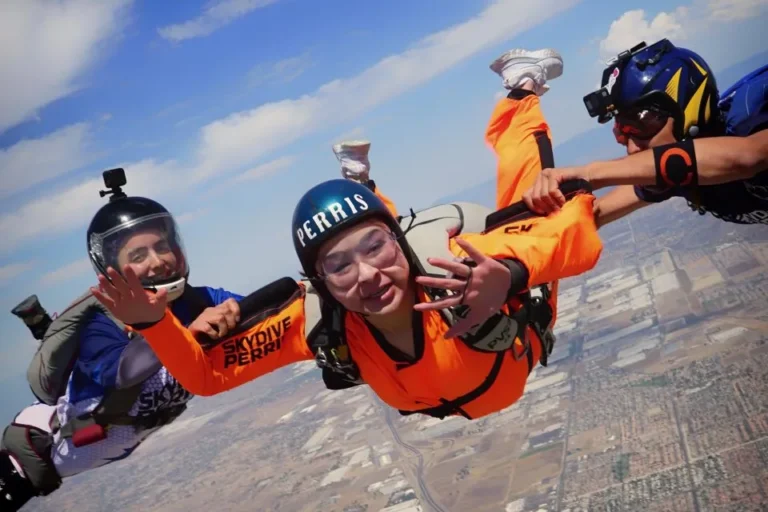
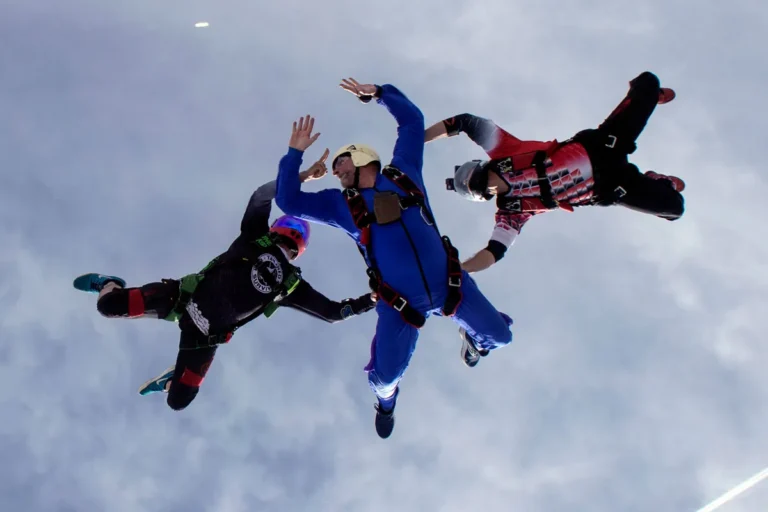
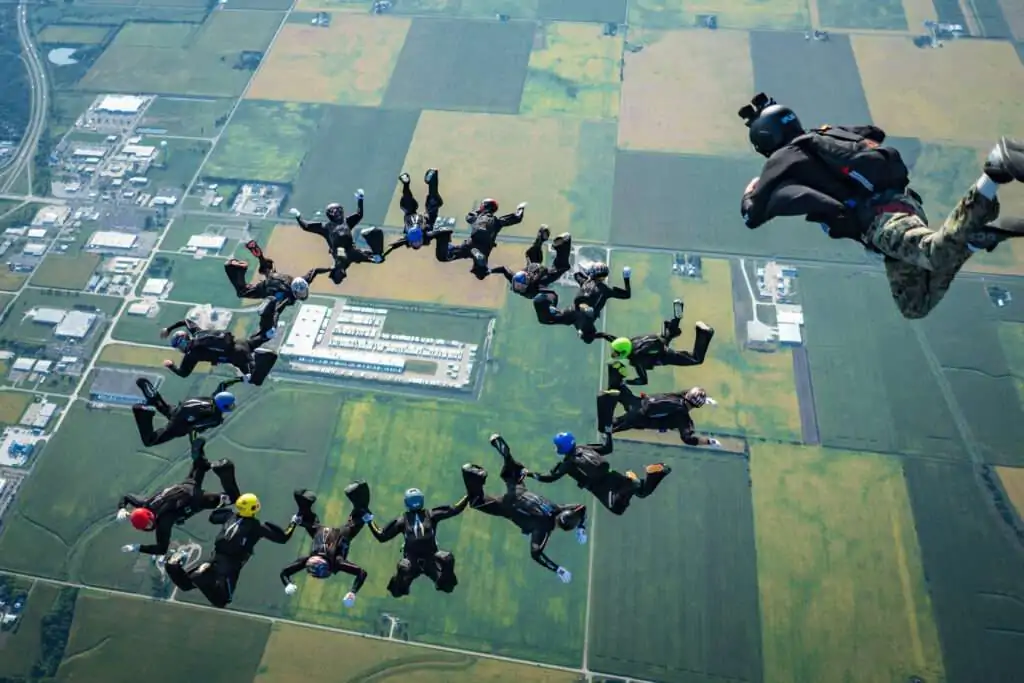
Best formation skydiving united states. The execution of multi-person aerial formations within civilian parachuting represents a highly disciplined branch of modern aviation physics and human biomechanics. While individual freefall involves managing solitary aerodynamic forces, group relative work introduces a system of shared relative airflows. Teams must manipulate these airflows with high precision within tight time limits. The development of this discipline across the North American continent has established several centers specialized in facilitating large-scale relative work. These specific centers are defined by their unique airspace capacities, specialized multi-aircraft fleets, and dedicated coaching frameworks.
An objective assessment of large-scale relative work shows that structural infrastructure dictates performance outcomes. The physical layout of a drop zone must accommodate complex multi-aircraft formations flying in close proximity to drop large groups of jumpers simultaneously. This operational reality demands synchronized flight patterns, highly calibrated jump runs, and strict adherence to separation protocols. Furthermore, the human capital required to direct these jumps is significant, needing specialized load organizers who understand fall-rate calibration and aerial docking dynamics. These institutional factors separate casual regional jumping clubs from true high-performance training centers.
To understand this technical discipline, one must look closely at the underlying physics that govern multi-person freefall formations. The structural mechanics of a formation are determined by how efficiently participants manage their personal surface areas relative to the surrounding air mass. This requires a precise understanding of the terminal velocity spectrum, where slight changes in body position alter local drag coefficients. Understanding these operational variables is critical for assessing how safety margins are preserved when multiple bodies move through the air column at high speeds.
Understanding Best Formation Skydiving United States
Evaluating the structural composition of the best formation skydiving united states requires analyzing the physical facilities, aircraft capacity, and weather patterns that make large-scale relative work possible. A premium formation facility is more than just a place with an open landing field. It functions as a complex aviation network where aircraft coordination, team training rooms, and wide airspace must align seamlessly. This alignment allows teams to execute intricate maneuvers safely and efficiently.
Airspace Requirements
A common misunderstanding among sports participants is that high-level relative work can be conducted anywhere that has a large airplane. In reality, the primary constraint is the availability of unrestricted airspace that allows large planes to climb past 15,000 feet without interfering with commercial airline routes. Premium centers are located far from major city airports, allowing them to secure wide jump zones that permit uninterrupted multi-plane operations.
Team Training Infrastructures
Oversimplifying these training centers can lead to poor resource planning during competitive team preparation. High-performance facilities feature specialized infrastructure, including modern creeping sheds equipped with smooth floors where teams can practice formation movements on wheeled dollies. Additionally, on-site digital video stations are necessary to allow coaches to analyze high-definition aerial footage immediately after every jump.
High-Altitude Lift Capacities
The capability to fly multiple large turboprop aircraft in tight, tiered flight formations is a defining asset of a true elite drop zone. This operational capability requires highly trained pilots who understand the unique wake turbulence risks associated with flying close to other heavy aircraft. When these elements are coordinated correctly, teams can build complex formations consisting of dozens of jumpers within a single freefall sequence.
Deep Contextual Background
The development of formation parachuting centers in the United States tracks closely with the transition from round military surplus parachutes to square, steerable ram-air canopies. During the late 1960s and early 1970s, early relative work pioneers began experimenting with multi-person stars over Ohio and California. These early attempts were limited by the slow climb times of small, piston-engine aircraft, which restricted the time teams had to build formations before reaching deployment altitude.
The Shift to Twin-Turbine Fleets
The capability of elite facilities changed fundamentally during the 1980s and 1990s with the introduction of twin-turbine aircraft like the DeHavilland Twin Otter and the Short Skyvan. These heavy transport planes provided large cabins and wide side doors, which allowed large groups of jumpers to exit the aircraft together in a single mass. This development shifted the focus of the sport from simply completing basic shapes to executing complex sequential maneuvers.
Wind Tunnel Integration
In the modern era, top-tier formation centers have evolved into integrated training facilities that often operate in close proximity to large vertical wind tunnels. This integration allows teams to practice complex body movements in a controlled indoor environment before applying those skills in actual freefall. Modern training protocols combine indoor tunnel sessions with high-altitude plane jumps to accelerate skill development and optimize team performance.
Conceptual Frameworks and Mental Models
Executing high-level relative work requires specialized mental models that help teams manage air displacement, terminal velocity ranges, and spatial awareness.
The Aerodynamic Burble Displacement Model
The primary framework utilized by formation flyers is the Aerodynamic Burble Displacement Model. This model describes the low-pressure wake, or “burble,” that forms directly above a skydiver as they drop through the air column.
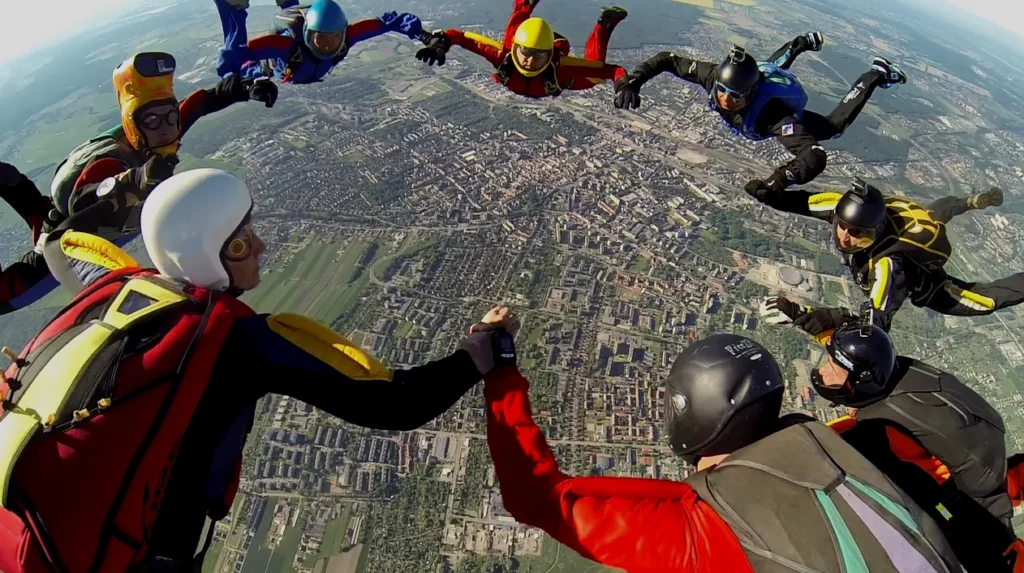
For a jumper approaching a built formation from above, this model dictates that they must avoid flying directly over the top of another participant. Entering this low-pressure wake causes a sudden loss of air resistance, which can lead to an accidental collision. The limit of this model occurs when large formations create a combined upward air displacement that can destabilize jumpers flying nearby.
The Relative Fall-Rate Calibration Matrix
A secondary framework is the Relative Fall-Rate Calibration Matrix. This model maps how changes in body surface area allow jumpers of different physical weights to fall at the exact same speed.
This matrix requires load organizers to balance the layout of a formation based on the physical size of the participants. Heavy jumpers must wear loose-fitting suits to increase drag, while lighter jumpers use weighted vests or tight suits to increase their fall rate. This balancing ensures that all members can maintain a uniform horizontal level during the jump.
The Radial Approach Sector Model
A third framework is the Radial Approach Sector Model, which governs how individual jumpers fly toward a central formation after exiting the aircraft. This model divides the airspace around the base formation into distinct, pie-shaped lanes that radiate outward from the center.
Jumpers are assigned specific lanes based on their slot in the final formation, and they must stay within these boundaries during their approach. This radial isolation prevents participants from crossing paths or colliding during the high-speed closing phase. The model breaks down if a jumper loses visual sight of the central base, requiring an immediate break-off to clear the airspace.
Key Categories and Technical Variations
Formation skydiving centers and styles across the United States can be classified into distinct technical categories based on the layout and orientation of the jumps.
Traditional Belly-to-Earth Centers
These facilities focus on traditional flat relative work, where jumpers maintain a horizontal position relative to the ground. This discipline emphasizes precise grip placement and fast sequential scoring transitions during competitive team events.
Vertical Formation Skydiving Hubs
Specialized centers facilitate advanced vertical relative work, where jumpers fly in head-down or head-up orientations. This discipline features significantly higher terminal velocities, requiring faster reaction times and specialized gear adjustments.
Large-Formation Record Facilities
A select group of elite drop zones specializes in hosting massive record attempts that involve over one hundred jumpers in a single formation. These events require multiple aircraft flying in tight formations and sophisticated tracking protocols to ensure safe separation before canopy deployment.
Mixed-Formation MFS Infrastructure
Emerging facilities support mixed relative work, where teams combine flat and vertical flying styles within the same skydiving sequence. This style requires advanced coaching tools to help jumpers manage the complex transitions between different fall rates.
Detailed Real-World Scenarios
Scenario A: Managing a Funneled Base in a Competitive 4-Way Sequence
A competitive team exits a Twin Otter at 14,000 feet to execute a high-speed sequential formation program. During the initial exit, a timing error causes the central base to twist and collapse, or “funnel,” into an unstable spin.
-
Constraint: The team has a limited 35-second working time window before reaching their mandatory break-off altitude.
-
Decision Point: The team captain must decide whether to attempt to rebuild the complex initial formation or transition immediately to a basic stable star to regain control.
-
Failure Mode: Continuing to hold onto grips within the spinning funnel, which causes the team to lose altitude rapidly while remaining unstable.
-
Second-Order Effect: The delayed recovery reduces the time available for scoring points and shortens the safe separation window prior to canopy deployment.
Scenario B: Navigating Sector Deviations During a 100-Way Large-Formation Jump
During a multi-plane record attempt over a desert facility, a jumper flying in an outer trail aircraft exits slightly behind the count. This delay forces them to chase the central formation from a downwind position.
-
Constraint: The jumper faces high closing speeds while flying through the turbulent wake generated by the main body of jumpers.
-
Decision Point: The individual must choose to either push their approach through the turbulent air or abandon their slot and fly wide to maintain a safe distance.
-
Failure Mode: Diving aggressively through the wake of the formation, resulting in a high-speed collision with an outer wing station.
-
Second-Order Effect: The collision disrupts the stability of the entire formation, triggering an early break-off signal across all sectors.
Planning, Cost, and Resource Dynamics
Participating in high-level relative work at elite centers requires a clear understanding of the financial and logistical commitments involved.
| Resource Category | Cost Range (USD) | Primary System Drivers |
| Team Training Jump Ticket | $38 – $55 (Per Slot) | Aircraft fuel efficiency, altitude targets, multi-plane coordination. |
| Elite Coach Fees | $250 – $600 / Day | Coach reputation, digital video review time, tunnel analysis. |
| High-Definition Air Videography | $45 – $80 (Per Jump) | Video flyer equipment maintenance, slot fees, editing software. |
| Multi-Plane Camp Registration | $300 – $800 (Event Fee) | Multi-aircraft staging costs, load organizer compensation, safety infrastructure. |
Team Logistics and Tunnel Balancing
The cost efficiency of a training program depends heavily on balancing airplane jumps with wind tunnel sessions.
Teams often split their training budgets between winter tunnel camps and summer drop zone sessions to maximize their skills while managing high aircraft operational costs.
Tools, Strategies, and Support Systems
Safe execution of complex group formations relies on an integrated system of communication tools and safety equipment.
High-Speed Digital Tracking Altimeters
Jumpers in large formations utilize programmable audible altimeters that emit distinct tones in their helmets at different altitudes. These tones provide critical cues for when to break away from the formation, when to deploy tracking canopies, and when to initiate final deployments.
Specialized Formation Jumpsuits
Relative work jumpsuits are engineered with heavy, durable fabric handles, or “grips,” sewn onto the arms and legs. These grips provide secure connection points for teammates, allowing them to build stable formations without tearing the fabric of the suit.
GPS Ground Track Monitors
Modern jumpmasters utilize real-time GPS tracking systems attached to the aircraft to monitor ground drift during the climb. This data ensures the plane releases the group at the exact point required for all jumpers to return safely to the primary landing area.
Risk Landscape and Failure Modes
The safety profile of large-scale formation skydiving is defined by compounding factors that can quickly escalate if tracking discipline is not maintained.
Technical Risk Profiles
-
Funnel Displacement: A loss of control that causes a formation to collapse into a spinning mass, which can disorient participants and obscure altitude awareness.
-
Sector Track Deviation: Failing to fly along a straight radial line during break-off, which can lead to a collision with another jumper during the high-speed tracking phase.
-
Canopy Proximity Encounter: Opening a parachute too close to another jumper, which increases the risk of canopy entanglement or line twists.
-
Off-Field Landing Strain: Drifting away from the designated drop zone due to an incorrect exit point, forcing jumpers to navigate hazardous obstacles like power lines or trees.
Governance, Maintenance, and Long-Term Adaptation
All high-level formation activities in the United States operate under the safety regulations established by the Federal Aviation Administration and the United States Parachute Association. Large-scale events require formal safety briefings and detailed load manifests to ensure compliance with federal airspace rules.
Long-term management of elite training centers requires ongoing maintenance of the aircraft fleet and regular reviews of emergency response procedures. Drop zone owners must work closely with regional air traffic control centers to coordinate jump flights, ensuring that sport operations do not conflict with commercial commercial air traffic.
Measurement, Tracking, and Evaluation
Safety directors use a specific set of metrics to monitor performance and evaluate safety margins during team training camps and record events.
Quantitative Metrics
-
Scoring Formations Per Lift: Tracking the number of completed formations within a single jump to measure team efficiency.
-
Break-Off Separation Distance: Measuring the horizontal distance between jumpers at the moment of canopy deployment to ensure effective tracking.
-
Aircraft Climb Efficiency: Monitoring climb times to different altitudes to manage fuel consumption and plane performance.
Qualitative Signals
-
Grip Placement Precision: Assessing how cleanly jumpers take their assigned grips without disturbing the stability of the base.
-
Tracking Path Consistency: Reviewing video footage to ensure all participants maintain straight lines when breaking away from the group.
Ethical and Practical Considerations
Maintaining a world-class formation training facility requires balancing intensive flight schedules with local environmental and community needs. Operating large twin-turbine aircraft for multiple consecutive flights can create significant noise footprints that affect nearby residential areas.
To maintain positive community relations, elite drop zones design specialized flight profiles that avoid flying directly over noise-sensitive zones during early morning hours. This proactive management helps protect the facility’s long-term access to local airspace while supporting the training needs of competitive teams.
Synthesis and Evaluation
The development of the best formation skydiving united states depends on maintaining a strong infrastructure that balances pilot training, aircraft maintenance, and rigorous jumper discipline. These specialized facilities provide the complex environments necessary to advance the sport of relative work safely.
By utilizing structured aerodynamic models, enforcing strict tracking patterns, and maintaining clear communication protocols, teams can minimize the risks inherent in group freefall. Ultimately, long-term success in this discipline relies on recognizing that large-scale relative work requires meticulous planning, precise execution, and a deep respect for the laws of fluid dynamics.