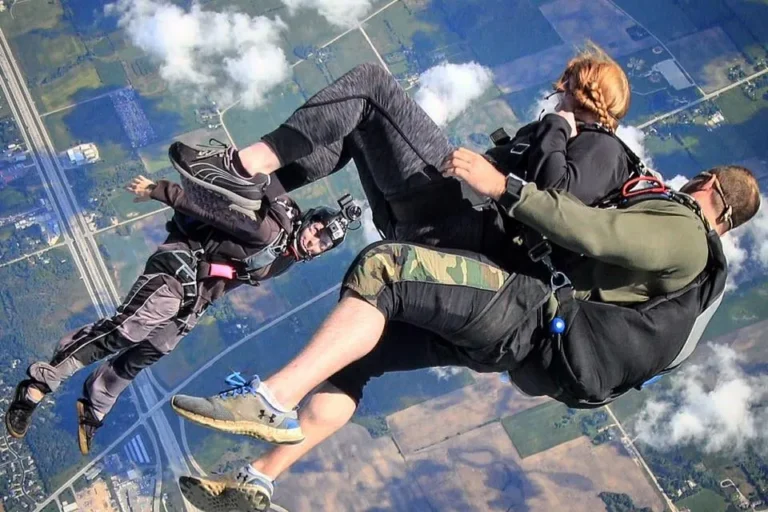
Top Dropzones in America: Operational & Aviation Infrastructure Guide
Civilian parachuting within the United States relies on a highly specialized network of non-commercial and commercial aviation facilities. These locations are universally designated as dropzones. They operate as decentralized hubs where federal airspace regulations, private aircraft management, and sport safety protocols intersect. The structural complexity of these operations is rarely visible to the casual observer, who often views the sport merely through the lens of recreational weekend leisure.
A systematic evaluation of the domestic skydiving landscape reveals that facilities are deeply influenced by regional geography. Microclimatic variations alter operational reliability, while local municipal zoning laws dictate runway lengths and noise mitigation protocols. Furthermore, the positioning of major commercial aviation corridors across the country creates distinct structural constraints. These variables force dropzone operators to develop sophisticated flight patterns to ensure safety while maximizing daily altitude capacity.
To analyze this industry thoroughly, one must investigate the logistical frameworks that separate standard club operations from massive turbine-powered facilities. The capital investments required to maintain specialized jump fleets, advanced manifest tracking systems, and vast landing areas are substantial. Understanding these underlying mechanics is essential for comprehending how the domestic parachuting framework maintains its operational safety records while managing thousands of annual participants.
Understanding “top dropzones in america”
To evaluate the structural composition of the top dropzones in america, the term must be defined using objective operational metrics rather than subjective aesthetic rankings. A premier parachuting facility is essentially an integrated aviation engine. It requires a delicate balance of aircraft fleet capacity, available landing acreage, seasonal weather consistency, and complex airspace coordination.
Airspace Coordination Realities
A common misunderstanding among sports participants is that size or passenger volume alone dictates the value of a facility. In reality, a high-volume dropzone that operates under restrictive airspace corridors face substantial hidden limitations. For example, a facility located near a major Class B hub may experience frequent ground holds. These holds are issued by air traffic control to accommodate commercial passenger jets, which introduces significant friction into daily lift schedules.
Geographic Constraints
Oversimplifying the valuation of these facilities leads to a fundamental miscalculation of safety margins. A premier dropzone must be evaluated by the structural layout of its primary and alternate landing areas. While interior valley locations often provide flat, open fields, coastal or mountainous regions introduce severe geographic barriers. These constraints include sheer cliffs, dense urban development, or vast water bodies.
Therefore, a truly elite facility must be recognized by its structural adaptability. It must maintain dedicated obstacle-free landing acres while simultaneously employing advanced meteorological tracking systems to manage localized air current anomalies.
Deep Contextual Background
The institutional evolution of American dropzones is structurally intertwined with the post-war modernization of the domestic aviation infrastructure. During the 1950s and 1960s, early sport parachuting centers relied on military surplus gear and small, piston-powered aircraft. These facilities functioned primarily as loose hobbyist clubs. They were often relegated to unpaved agricultural runways with minimal safety oversight or structural permanence.
The Turbine Revolution
The landscape shifted dramatically in the 1980s with the introduction of high-capacity turboprop platforms. The deployment of aircraft like the Twin Otter and the DeHavilland Caravan allowed operators to transport larger groups of jumpers to higher altitudes in a fraction of the time. This technological leap required a shift from club-level management to sophisticated corporate structures.
Consequently, regional centers began to consolidate, giving rise to modern “Super-Dropzones” that are capable of handling hundreds of jumps per day.
Modern Digital Integration
In the current era, these facilities have evolved into highly digitalized operations. Advanced reservation systems, automated manifest software, and real-time aircraft telemetry are used to maximize airspace efficiency. This digitalization has allowed the top dropzones in america to achieve unprecedented scaling.

They now function as true foundational pillars of civilian aviation. They actively contribute to local economic ecosystems while driving technological innovations in canopy design and safety equipment manufacturing.
Conceptual Frameworks and Mental Models
Navigating the operational realities of elite parachuting centers requires specific mental models that bridge fluid dynamics, logistics, and human behavior.
The Thermal Sink Capacity Model
The primary framework utilized is the Thermal Sink Capacity Model. This system analyzes how different ground surfaces absorb and radiate solar heat throughout the day. Dropzones located in desert environments or expansive agricultural basins experience dramatic thermal updrafts as the sun heats the earth.
For a parachutist, this model explains why surface winds can become highly turbulent during mid-afternoon hours. The cooler air from adjacent orchards or water features rushes in to replace rising hot air over asphalt runways. The limit of this model is reached during high-velocity regional storm patterns, which completely override local thermal cycles and homogenize lower boundary layer air currents.
The Space-Time Airspace Partitioning Matrix
A secondary framework is the Space-Time Airspace Partitioning Matrix. This model calculates the exact separation windows required when multiple aircraft drop different disciplines of jumpers from various altitudes simultaneously. Freeflyers, wingsuiters, and traditional tandem pairs descend at vastly different vertical and horizontal speeds.
The matrix dictates that tracking groups must be released with strict time delays relative to the aircraft’s ground speed. If the pilot fails to maintain the correct ground track or if the manifest mixes incompatible speed profiles, the structural safety buffer is compromised. This failure increases the probability of mid-air canopy conflicts or freefall proximity incidents.
Key Categories and Technical Variations
Domestic dropzones are categorized by their geographic layout and primary operational focus. Each variation introduces unique technical challenges and specific infrastructure requirements.
Desert Basin Super-Dropzones
Located predominantly in the Southwest, these massive facilities feature completely flat terrain and minimal tree coverage. They provide exceptionally large landing areas, making them ideal for high-speed canopy piloting training and large-formation skydiving records.
The primary trade-off involves managing intense heat and low density altitudes during summer months, which drops aircraft climb efficiency.
Coastal Marine Dropzones
Operating along the Pacific and Atlantic coastlines, these facilities offer dramatic visual environments. They are defined by cold marine layers and sudden wind shifts that can bring low cloud decks over the runway within minutes.
Jumpers must maintain highly conservative landing patterns to prevent being caught downwind over open water.
Mountainous Alpine Centers
Situated within or adjacent to major mountain ranges, these dropzones introduce complex valley wind systems and mechanical turbulence.
Pilots must be highly skilled in mountain flying techniques, and jumpers must account for elevated terrain baselines that alter their altitude awareness.
Inland Agricultural Hubs
Found across the Midwest, these facilities are surrounded by vast farm fields that offer endless emergency landing options.
While they provide a highly forgiving environment for novice jumpers, they are often subject to fast-moving convective thunderstorm systems that can ground flight operations for days.
Detailed Real-World Scenarios
Scenario A: Managing Multi-Aircraft Lift Density During Peak Formation Events
A premier desert dropzone is hosting a 100-way formation skydiving event. Three turbine aircraft must fly in tight formation to release all jumpers simultaneously at 16,000 feet.
-
Constraint: The lead aircraft experiences a minor telemetry lag, altering the jump run vector by 300 yards.
-
Decision Point: The jumpmaster must decide whether to abort the jump run immediately or adjust the exit sequence while moving at 100 knots.
-
Failure Mode: Releasing the jumpers on the skewed vector, causing the outer wings of the formation to drift over a restricted industrial zone downwind.
-
Second-Order Effect: Jumpers are forced to execute emergency low-altitude off-field landings on concrete structures, resulting in equipment damage and regulatory inquiries.
Scenario B: Navigating a Sudden Marine Stratus Inversion
A coastal facility is running consecutive tandem loads using a single high-speed turboprop plane. On the fourth climb, a dense bank of sea fog rolls toward the runway.
-
Constraint: The plane is already at 13,000 feet, and ground visibility is dropping below visual flight rules (VFR) minimums.
-
Decision Point: The pilot must choose whether to land the aircraft with all passengers on board or coordinate with ATC to find an alternate inland runway.
-
Failure Mode: Attempting to drop the jumpers through a break in the clouds, assuming the hole will remain open until canopy deployment.
-
Second-Order Effect: Jumpers become disoriented inside the cloud layer, losing track of the shoreline and drifting into active marine shipping lanes.
Planning, Cost, and Resource Dynamics
Operating an elite-tier parachuting facility requires substantial capital outlays and precise allocation of financial resources. These costs are driven by strict maintenance schedules and aviation fuel volatility.
| Operational Cost Component | Annual Financial Allocation (USD) | Primary System Drivers |
| Turbine Fleet Maintenance | $150,000 – $350,000 | Mandatory hot-section engine inspections, propeller overhauls, fuel control adjustments. |
| Airfield Infrastructure | $80,000 – $200,000 | Runway resurfacing, obstacle clearance, hangar climate control, manifest tech. |
| Safety System Insurance | $100,000 – $250,000 | Liability coverage, hull insurance, worker compensation matrices. |
| Staff Certification Reserves | $30,000 – $75,000 | Rigging recertifications, instructor proficiency courses, pilot training checks. |
Opportunity Costs and Weather Delays
The economic health of a dropzone is highly sensitive to weather-related downtime. When winds exceed safety minimums or cloud layers drop, a facility continues to incur fixed overhead costs without generating lift revenue. This dynamic requires operators to maintain substantial cash reserves to survive extended seasonal deficits.
Tools, Strategies, and Support Systems
The execution of high-volume, safe operations at top dropzones relies on a matrix of advanced technical systems and specialized gear.
Automated Manifest and Lift-Tracking Software
Modern facilities utilize dedicated digital manifests that synchronize passenger weights, instructor availability, and aircraft fuel burns. These tools prevent overloading and ensure that planes operate within optimal weight and balance limits.
Automatic Activation Devices (AADs)
Every modern rig used at top-tier facilities is equipped with a micro-processor controlled barometric computer. If a jumper fails to deploy their parachute, the device automatically cuts the reserve loop at a pre-set altitude window.
Remote Meteorological Sensing Arrays
Advanced dropzones deploy sonic anemometers and digital barometers across their landing properties. These instruments provide real-time wind profile data to manifest terminals, allowing safety officers to spot low-level wind shear before it impacts landing canopies.
Risk Landscape and Failure Modes
The operational risk profile of a major skydiving center is characterized by compounding environmental and human variables that can lead to systemic failures if unmanaged.
Detailed Breakdown of Hazards
-
Airspace Encroachment: Occurs when a non-compliant transient aircraft enters the designated dropzone cylinder without coordinating on the local traffic frequency.
-
Canopy Pattern Saturation: High-density lifts can result in too many parachutes entering the landing pattern simultaneously, leading to cross-wind conflicts.
-
Mechanical Turbulence Intercept: Wind blowing across large hangars or nearby tree lines creates rotor currents that can deflate high-performance wings near the ground.
-
Material Fatigue Acceleration: Continuous exposure to UV radiation and regional dust degrades canopy nylon fibers, reducing the structural integrity of the fabric.
Governance, Maintenance, and Long-Term Adaptation
All premier parachuting operations in the United States function under the dual governance of the FAA and the United States Parachute Association. Airworthiness directives (ADs) issued by the FAA require immediate compliance, often forcing operators to ground specific aircraft models until structural inspections are completed.
Long-Term Environmental Planning
Maintaining a top-tier facility requires proactive land-use adaptation. As suburban sprawl expands across the country, airports that were once isolated are now surrounded by residential developments.
Dropzones must actively engage with local planning commissions to secure permanent zoning protections. These protections preserve clear flight paths and safeguard necessary obstacle-free landing footprints for future decades of operation.
Measurement, Tracking, and Evaluation
Dropzone safety managers rely on a balanced matrix of indicators to monitor daily operational integrity and evaluate long-term risk profiles.
Quantitative Data Metrics
-
Pattern Deviation Excursion Index: Tracking the percentage of jumpers who violate the designated left-hand or right-hand landing pattern protocols.
-
Turbine Temperature Cycle Metrics: Monitoring engine exhaust gas temperatures during heavy climb phases to identify early signs of turbine blade degradation.
-
Drogue Deployment Altitude Precision: Utilizing electronic data logs to verify that tandem instructors are initiating canopy sequences within the mandatory safety windows.
Qualitative Safety Signals
-
Pilot Airspace Fatigue Indicators: Evaluating communications clarity and response times with local air traffic control during high-intensity weekend operations.
-
Jumper Behavioral Anchoring Signals: Observing landing area interactions to ensure that personal performance pressures do not lead to aggressive canopy maneuvers in crowded skies.
Ethical and Practical Considerations
Managing a high-volume parachuting center requires a careful balance between commercial goals and community relations. The loud noise profiles of large turboprop aircraft flying repetitive climb tracks can cause tension with neighboring residential areas.
To address this, premier facilities implement strict voluntary noise abatement procedures. They choose to adjust their flight paths away from populated neighborhoods, even when doing so increases fuel consumption. This proactive approach helps preserve essential long-term relationships with local municipal leaders and airport authorities.
Synthesis and Evaluation
The structural viability of the top dropzones in america depends on an unyielding commitment to operational precision and regulatory alignment. These facilities are far more than recreational fields. They are highly complex aviation environments where technology, geography, and human factors must be continuously balanced.
By investing in modern fleets, enforcing disciplined airspace separation models, and maintaining transparent safety tracking systems, premier centers protect their participants while preserving long-term access to the skies.